We must submit a request to UNESCO seeking recognition of the living gestures of hospitality in the Mediterranean Sea and along its shores as Intangible Cultural Heritage of Humanity. For these gestures of rescue, care, welcome, kindness, and tenderness sustain our humanity—present and future. For a shared yet dissident policy of their protection and transmission to future generations is now imperative, at a time when, in Europe, violence is increasingly becoming a programme of government.
We must therefore submit this year the ICH-01 form, known as the “Urgent Safeguarding” file, presented here in digital form. Such a procedure requires written texts, ten high-definition images, and a film lasting five to ten minutes, all gathered below. It also requires a multiplication of letters and signatures, a first set of which is presented in Annex 1 (Consent Materials). This platform—an application file not yet submitted to UNESCO (but will be in 2026)—is the instrument of our mobilisation, intended to gather many more letters and signatures (to be sent to: contact@perou-paris.org). As such, this platform also functions as a manifesto, to declare together: “We are the shore”, and affirming that we will implement everything necessary to sustain and expand the gestures to which we are deeply attached.

Collective PEROU
Urgent Safeguarding List
ICH-01 Form
List of Intangible Cultural Heritage in Need of Urgent Safeguarding
Instructions for completing the form are available on the website of UNESCO.
Table of Contents
Preliminary Information
A. State Party or States Parties
None
Note: In 2025, European governments are increasingly developing policies of violence rather than welcome toward people seeking refuge. This exceptionally serious situation justifies the present, equally exceptional procedure: a direct address to Mr. Khaled El-Enany, Director-General of UNESCO, from the communities that actively practise living hospitality in Europe today. The persistence of their gestures—technical, sensitive, and embodied—is now threatened by States which, in light of the rights, principles and histories upon which they are founded, should instead defend their safeguarding and transmission to future generations. Considering that the 2003 UNESCO Convention recognises the full legitimacy of communities to define elements eligible for Intangible Cultural Heritage of Humanity, the Director-General is in a position to acknowledge the validity of this approach and to receive this file, which is duly constituted below. While it may appear irregular to those who consider only its procedural trajectory, since under the applicable texts such a dossier should be submitted by one or more States that have previously recognized the element as part of their national intangible cultural heritage, the present dossier is nonetheless firmly grounded when its object—vital to present and future humanity—and its intended addressee are taken into consideration, insofar as it has been prepared by experts in living hospitality.
B. Name of the element
The living gestures of hospitality in the Mediterranean Sea and along its shores
C. Name of the communities, groups or individuals concerned
The routes taken today by exiled people across the Mediterranean trace a geography—from the open sea to the shores—within which collectives organise to save and care for lives in danger. These communities form an active multitude of diverse names and statuses: NGOs, associations, residents’ collectives, private companies, public authorities and institutions, isolated individuals, as well as collectives of refugees who, through acts of mutual aid, contribute to the vitality of these multiplied gestures that sustain our humanity, now and to come.
1. General information about the element
For Criterion 1, States shall demonstrate that the element constitutes intangible cultural heritage as defined in Article 2 of the Convention
.
Note: In this exceptional case, it is we—the directly concerned communities—who take up the pen (see PRELIMINARY INFORMATION).
Note 2: Article 2(1) of the 2003 UNESCO Convention defines “intangible cultural heritage” as:
“the practices, representations, expressions, knowledge and skills—as well as the instruments, objects, artefacts and cultural spaces associated therewith—that communities, groups and, in some cases, individuals recognise as part of their cultural heritage. This intangible cultural heritage, transmitted from generation to generation, is constantly recreated by communities and groups in response to their environment, their interaction with nature and their history, and provides them with a sense of identity and continuity, thus promoting respect for cultural diversity and human creativity.”
1.1. Provide a brief description of the element that can introduce it to readers who have never seen or experienced it. (Not to exceed 300 words)
The gestures of living hospitality refer to the whole set of actions, sometimes modest, often decisive, through which people today make themselves unconditionally present to other lives in danger, at sea and, in particular, along European shores.. These are concrete gestures, invented and reinvented at a time when climatic and geopolitical shocks force countless people to flee the unlivable.
They consist in moving toward shipwrecked persons; smiling and embracing to signal welcome; offering shelter; handing over a blanket; sharing food; tending to a wound; listening, guiding, supporting, translating. They belong to a genuine art of relation: approaching and welcoming unconditionally; recognising in the unknown person a life of absolute equality; allowing a story to be told, a silence to exist.
These gestures are invented on the open sea or right there—on a pavement, in a wasteland, on a heath—as well as within associative or professional spaces of care, support and counselling. They are looks, hands, and words that transform hostile situations into habitable spaces and times. They are bodies that build—sometimes through their mere presence—places of life that protect, connect and reorganise what was scattered. They create forms of urbanity, often unexpected, sometimes lasting, composed first of kindness and friendship.
The living gestures of hospitality build thresholds of great beauty, warm hearths, secure shelters, paths and horizons. They bind those who welcome and those who arrive in the same movement of survival, in the same intensity of life. Every gesture, however small, contributes to maintaining the continuity of the world where it threatens to unravel. In this sense, living hospitality is a precise way of building: places, bonds, possibilities, breath, futures. At a time when contemporary migrations signal the end of our distances, these gestures create a common ground in which every life, in this 21st century, may find support to cross, resume, begin again, and still dream.
1.2. Who are the bearers and practitioners of the element? Are there any specific roles, including gender-related ones or categories of persons with special responsibilities for the practice and transmission of the element? If so, who are they and what are their responsibilities? (Not to exceed 100 words)
The practitioners of living hospitality form a plural assembly: residents, refugees, collectives, associations, rescuers, caregivers, and social workers who support lives in movement and in danger through concrete acts—saving, caring, sheltering, feeding, guiding, listening, protecting, accompanying. Some act independently; others operate within public reception systems that they sustain, adapt, extend or reinvent. Together they form a community without contours or fixed identity, a multitude without hierarchy, bound by the paths of those seeking a better life here and now. Their interventions, scattered yet articulated over time, weave a continuity that renders the world traversable and breathable.
1.3. How are the knowledge and skills related to the element transmitted today? (Not to exceed 100 words)
Living hospitality gestures are often learned through direct contact with situations, by observation, imitation and informal apprenticeship. They are transmitted in the thickness of everyday life and collective action. Within specialised organisations—NGOs, associations, public and hospital services—these gestures also rely on more specific and continuous training processes. Ways of acting or listening, emergency or long-term assistance protocols are transmitted through practice, shared narratives and collective experience as much as through technical manuals and specialised training. This knowledge thus constitutes a diffuse, fragile yet widespread culture, notably carried by exiled people who often retain its precise memory.
1.4. What social functions and cultural meanings does the element have nowadays for the communities concerned? (Not to exceed 200 words)
Socially, these gestures undoubtedly compensate for the absence of reception policies, but above all they sketch—as pioneering acts preceding unprecedented migratory movements—policies for the 21st century. They ensure safety, care, comfort and orientation for anyone arriving from elsewhere, thereby defining new terms, places and infrastructures for an here-and-now open to the multitude. They simultaneously strengthen local bonds, revealing or reawakening diffuse solidarities, transforming strangers into allies, neighbours into collectives, places into powerful environments. They reorganise relationships between residents, institutions and territories, creating the conditions for a desirable world to come.
Culturally, they magnify our roots, connect us to ancient poems, and re-tie us to founding narratives—to that ancestral peace pact with the stranger that inaugurated our history. Yet they are not mere reproductions; they are contemporary actualisations of millennia-old acts in the face of a radical ecological crisis that exposes our global interdependencies and unprecedented proximities. They rewrite the immemorial story of one person welcoming another in a world where the other no longer passes through, but has definitively become a neighbour of the shore. These gestures of sustaining the life of the other among us sketch a world whose history has not yet been written. In the Mediterranean today, living hospitality thus appears as the fragile yet crucial promise of a common, plural world of singular splendour, still undescribed.
1.5. Can the State Party or States Parties confirm that nothing in the element is incompatible with existing international human rights instruments? (Not to exceed 50 words)
The living gestures of hospitality fully align with both the spirit and the letter of the most fundamental international instruments affirming the dignity of every human being, the right to life and security, and the principle of non-discrimination. They do not contravene any international legal framework; on the contrary, they give concrete, embodied expression to its core values.
1.6. Can the State Party or States Parties confirm that nothing in the element could be perceived as not compatible with the requirement of mutual respect among communities, groups and individuals? (Not to exceed 50 words)
Living hospitality gestures are founded precisely on the recognition of the other, their dignity and integrity. They involve neither forced assimilation nor cultural imposition, nor any hierarchy between those who welcome and those who arrive. Instead, they create relationships grounded in attention and reciprocity, thereby strengthening mutual respect in practice.
1.7. Can the State Party or States Parties confirm that nothing in the element could be perceived as not compatible with the requirement of sustainable development? (Not to exceed 50 words)
Living hospitality gestures are rooted in a logic of care for people and environments alike. They preserve human, social and territorial resources by strengthening solidarity, resilience and collective adaptive capacity. They thus actively contribute to sustainable development goals, supporting societies’ adaptation to ongoing ecological and existential crises.
1.8. Are there customary practices governing access to the element? If yes, describe any specific measures that are in place to ensure their respect. (Not to exceed 100 words)
Strictly speaking, there are no formalised customary practices governing access to living hospitality gestures. This intangible cultural heritage does not rely on a codified system or prescribed protocol; rather, it is anchored in situated uses, tested attitudes, and implicit norms of care that emerge within contexts of mobilisation alongside people in situations of vulnerability.
2. Need for urgent safeguarding
For Criterion 2, States shall demonstrate that the element is in urgent need of safeguarding because its viability is at risk despite the efforts of the community, group, or if applicable, individuals and State(s) Party(ies) concerned.
Describe the current level of viability of the element with reference to the threats to its transmission and enactment. (Not to exceed 300 words)
The viability of living hospitality gestures—and their transmission to future generations—is today threatened by a convergence of political and cultural factors.
A first threat lies in their growing criminalisation. In many European contexts, welcoming a foreigner, hosting an undocumented person or providing assistance is treated as an offence. This criminalisation transforms a gesture of rare beauty into a suspicious act, breaking the chain of transmission: what can no longer be practised openly becomes far more difficult to teach.
The securitisation of our societies intensifies this threat. Fear—of the other, of scarcity, of collapse—is cultivated as a contemporary mode of governance. It produces withdrawn subjectivities for whom a gesture of hospitality appears as a risk rather than a strength. This fuels the rise of far-right movements and governments across Europe, whose programmes share an attachment to identity-based passions and hostility toward foreigners. In such a climate, practising hospitality is framed as betrayal—of a culture, an identity, a people. Language itself becomes contaminated: the words of hospitality are disqualified as naïve, dangerous or ideological, while refusal, exclusion and rejection are recoded as responsible acts.
Those who persist in practising living hospitality in dissidence are thus exposed to mounting pressures. The fragility of places and timeframes, the disappearance of common spaces, and the economic precarity of the associative sector generate a discouragement emblematic of our era. Gestures risk becoming less assured; awareness of their splendour risks fading. Representations themselves are corroded: what remains in the shared language of hospitality practitioners is increasingly the idea of a “duty of hospitality”—a burden, a charge imposed upon them, upon us. A debt. But transmitting a debt cannot constitute a programme. Those of us who practise living hospitality are running out of resources to grasp the full stature of our gestures and thus to share and perpetuate them. This calls unmistakably for urgent safeguarding: we are, without doubt, running out of breath.
3. Safeguarding plan
For Criterion 3, States shall demonstrate that a safeguarding plan is elaborated that may enable the community, group or, if applicable, individuals concerned to continue the practice and transmission of the element
.
3.1. What primary objective(s) will be addressed? (Not to exceed 200 words)
The living gestures of hospitality in the Mediterranean Sea and along its shores today constitute specific forms of knowledge, know-how and ways of being. Struck by unprecedented ecological and geopolitical upheavals, we are inventing here and now a new repertoire of relations. The migrant no longer passes through but appears as a neighbour of the shore; the migrant is no longer exclusively the other, but potentially each and every one of us, confronted with the upheavals of the world. Languages resonate, new shared histories emerge—histories that only assured gestures of rescue, kindness and friendship can allow to take root and flourish.
A safeguarding plan must therefore renew the representational repertoire of living hospitality gestures. Though invented in urgency, they are also pioneers of worlds to come—possibly worlds of great beauty. Their history must be rewritten, their resonance amplified, their status affirmed as a treasure for future generations.
Such a plan must simultaneously contribute to caring for those who perform these gestures. An unprecedented movement of gratitude must be invented in their direction. New ways of mobilising around them must be articulated—not through guilt, but through the affirmation that practising living hospitality means collectively building something great. A safeguarding plan must convince that, far from being a burden, these gestures are load-bearing, as architects would say, and that the habitability of future worlds depends upon them.
3.2. What are the key activities that will be carried out in order to achieve these objectives? (Not to exceed 200 words)
We must build an archive of these gestures to render them indelible. We must extend the photographic collection initiated on 18 and 19 December 2025 in Marseille with SOS Méditerranée, enriching it with materials entrusted by those who practise living hospitality at sea and along the shores. This collection must function as a training context for professionals and the wider public alike. Such an archive and training site must first be created in Marseille, then expanded outward.
We must develop spaces of care—psychological and somatic—dedicated to maritime and land-based hospitality practitioners. We must listen to their vulnerabilities, tremors and traumas, mobilising all relevant competencies to sustain their breathing, to restore the breath they need. Such a pioneering care facility must first be created in Marseille, then extended.
We must mobilise designers and students across all disciplines to forge the tools necessary for the perpetuation of these gestures. The Navire Avenir must be launched, and the elements of design, sound, graphics, cuisine and law presented on 18 and 19 December 2025 in Marseille must be developed. Many other tools must emerge through dedicated research and creation residencies aimed at equipping maritime and land-based operators. Such a research and creation site must first be established in Marseille, then expanded.
3.3. Provide a timetable for the proposed activities. (Not to exceed 200 words)
Everything has already begun, in Marseille and beyond. And nothing must stop.
3.4. Provide a detailed budget for the implementation of the activities proposed (if possible, in US dollars), identifying any available resources (governmental sources, in-kind community inputs, etc.).
The association Navire Avenir, founded in 2021, is responsible for deploying the safeguarding plan. It requires both structural and project-based support. Full details are available at www.navireavenir.eu and www.navireavenir.info.
The Navire Avenir Cooperative Society of Collective Interest (SCIC), founded in early 2026, is responsible for implementing the first vessel specifically designed for rescue and care on the high seas—a shared, active work, a pioneering ship of a peace armada, and one of the emblematic pillars of the safeguarding plan. At its current design stage, this creation is estimated at €34 million. €15 million must be raised to initiate construction. 150,000 shares at €100 each are offered for purchase by individuals and institutions. Contact: contact@navireavenir.eu
3.5. Describe the mechanisms for the full participation of communities, groups or, if appropriate, individuals in the proposed safeguarding plan. (Not to exceed 200 words)
Memories:
The creation of an archive of living hospitality gestures is grounded in community participation: the images have been and will continue to be contributed by those who operate today in the Mediterranean Sea and along its shores. It is a shared, contributive collection. Moreover, its dissemination—through acts of training—is conceived with and for the communities. This memory is not only a trace of past gestures, but a support for future ones. A collection created by present communities thus nourishes communities yet to come.
Care:
The design of specific care programmes and spaces for hospitality practitioners responds to precise needs identified within communities since 2020. Furthermore, the care to be developed consists precisely in ways of listening to them—particularly to their vulnerabilities. Community participation is therefore constitutive of this clinical dimension of the safeguarding plan.
Equipment:
Designing the tools necessary for perpetuating living hospitality gestures requires a precise analysis of community practices. The design of the Navire Avenir resulted from three years of inquiry with SOS Méditerranée crews. All objects and projects emerging from future research and creation will extend this methodology of systematic community engagement in the design process. This is what defines a tool: the gesture is inscribed within it. Communities will thus be active agents in shaping future equipment.
3.6. Provide evidence that the State(s) Party(ies) concerned is committed to supporting the safeguarding plan by creating favourable conditions for its implementation. (Not to exceed 200 words)
European States are currently not prepared to support this safeguarding plan for living hospitality gestures in the Mediterranean Sea and along its shores. This observation justifies the present direct appeal to UNESCO’s Director-General.
Nevertheless, the preparation of this file has been supported by the commitment of numerous public actors and members of public institutions and authorities. More than sixty European cultural institutions have hosted the PEROU collective and the Navire Avenir association in the process of formulating this address to UNESCO. Many members of the Assistance Publique – Hôpitaux de Marseille are currently involved in the safeguarding plan, which was first presented in an AP-HM building on 18 and 19 December 2025.
Moreover, the project originated at the Villa Medici – French Academy in Rome in 2020 and was selected in 2021 as a laureate of Mondes Nouveaux, a call for projects by the French Ministry of Culture. Finally, the publication of this platform on 10 January 2026 forms part of the programme of Agrigento2025, Italian Capital of Culture.
All these elements indicate that many actors within public institutions in France and Italy consider the protection of these gestures—those that sustain our humanity—to be crucial. States may not yet be ready to support the safeguarding plan outlined here, but many public actors already are. There is little doubt that States will follow.
3.7. Competent body(ies) involved in safeguarding the element
See the section “Assembly” on www.navireavenir.eu.
3.7.1. Provide the name, address and other contact information of the competent body(ies), and if applicable, the name and title of the contact person(s), responsible for the local management and safeguarding of the element.
- PEROU — contact@perou-paris.org
- NAVIRE AVENIR — contact@navireavenir.eu
3.7.2. Describe the competent body(ies) responsible for the local management and safeguarding of the element, and human resources available for implementing the safeguarding plan. (Not to exceed 200 words)
PEROU is a non-profit association founded on 1 October 2012 by political scientist and artist Sébastien Thiéry and gardener-poet Gilles Clément. The association is currently chaired by film critic Jean-Michel Frodon. PEROU brings together creators from multiple disciplines in support of those who practise living hospitality, developing in situ research and creation projects. These projects are internationally recognised, presented in numerous institutions—particularly in France—and published and taught in many schools of art, design, architecture and the humanities.
NAVIRE AVENIR is a non-profit association founded on 1 November 2021 in Marseille by members of various organisations involved in the conception of the Navire Avenir: Association des usagers de la PADA, SOS Méditerranée, Pilotes Volontaires, Assistance Publique – Hôpitaux de Marseille, and PEROU. It is currently chaired by sound artist Jean-Baptiste Lévêque, also a member of the collective Les Petits Déj’s solidaires in Paris. The association currently develops the three axes of the safeguarding plan in Marseille in close collaboration with numerous local organisations: schools, institutions, associations and collectives.
3.8. Tick the box whether you are requesting financial assistance and/or a service from UNESCO for the proposed safeguarding plan. If financial assistance and/or a service from UNESCO is requested, submit Form ICH-04.
We request financial assistance from UNESCO to implement the safeguarding plan for living hospitality gestures and, in particular, to create the Navire Avenir—a pioneering vessel of a peace armada, intended also to fly the UNESCO flag.
4. Community participation in the nomination process and consent
For Criterion 4, States shall demonstrate that the element has been nominated following the widest possible participation of the community, group or, if applicable, individuals concerned and with their free, prior and informed consent
. Additional contact information for main community organizations or representatives, non-governmental organizations or other bodies concerned with the element and their details are attached in ANNEX 1: CONSENT MATERIALS.
4.1. Describe how the communities, groups or individuals concerned have actively participated in all stages of the preparation of the nomination. (Not to exceed 300 words)
This application and the safeguarding plan presented herein result from a systematic process of inquiry with the communities concerned. The work began in Calais and then extended across France, leading to the publication of Des Actes. À Calais et tout autour, a first inventory of living hospitality gestures was established, forming part of the material used in the film submitted with this application. The process continued in Rome, at the Villa Medici, where Sébastien Thiéry, project coordinator, worked with various refugee organisations and Italian hospitality operators, including the coordinators of the Spin Time Lab squat, the largest reception space in the city. It also extended into the Mediterranean itself, insofar as members of SOS Méditerranée and Pilotes Volontaires participated in the design of the Navire Avenir and in the conception of multiple projects within the three axes of the safeguarding plan. In Marseille today, the project is developed with the Association des usagers de la PADA—the largest refugee association in France, with over 1,000 members—which has contributed since 2021 and participates in all experiments and public presentations as co-designer of the Navire Avenir and many associated works. It is also developed with the Assistance Publique - Hôpitaux de Marseille, whose healthcare professionals contribute across all three axes, from care for hospitality practitioners to emergency cuisine and the detailed design of the Navire Avenir. Numerous Marseille-based associations, collectives and NGOs have also participated in this file, selecting the ten images submitted here during two working days held on 18 and 19 December 2025, thereby finalising the application with full commitment and care. Many other community members have written and will continue to write letters of support published on this platform (see ANNEX 1: CONSENT MATERIALS).
4.2. Community organizations or representatives concerned
See the section “Assembly” on www.navireavenir.eu.
5. Inventory
For Criterion 5, States shall demonstrate that the element is identified and included in an inventory of the intangible cultural heritage present in the territory(ies) of the submitting State(s) Party(ies) in conformity with Articles 11 and 12 of the Convention.
None
Note: this application file is submitted to UNESCO in 2026 and is thus made available to any State wishing to adopt it in order to include living hospitality gestures in its national heritage. If this is not the case today, it is not due to community reluctance, but to impossibility—until proven otherwise.
6. Checklist for audiovisual materials
10 still photographies:
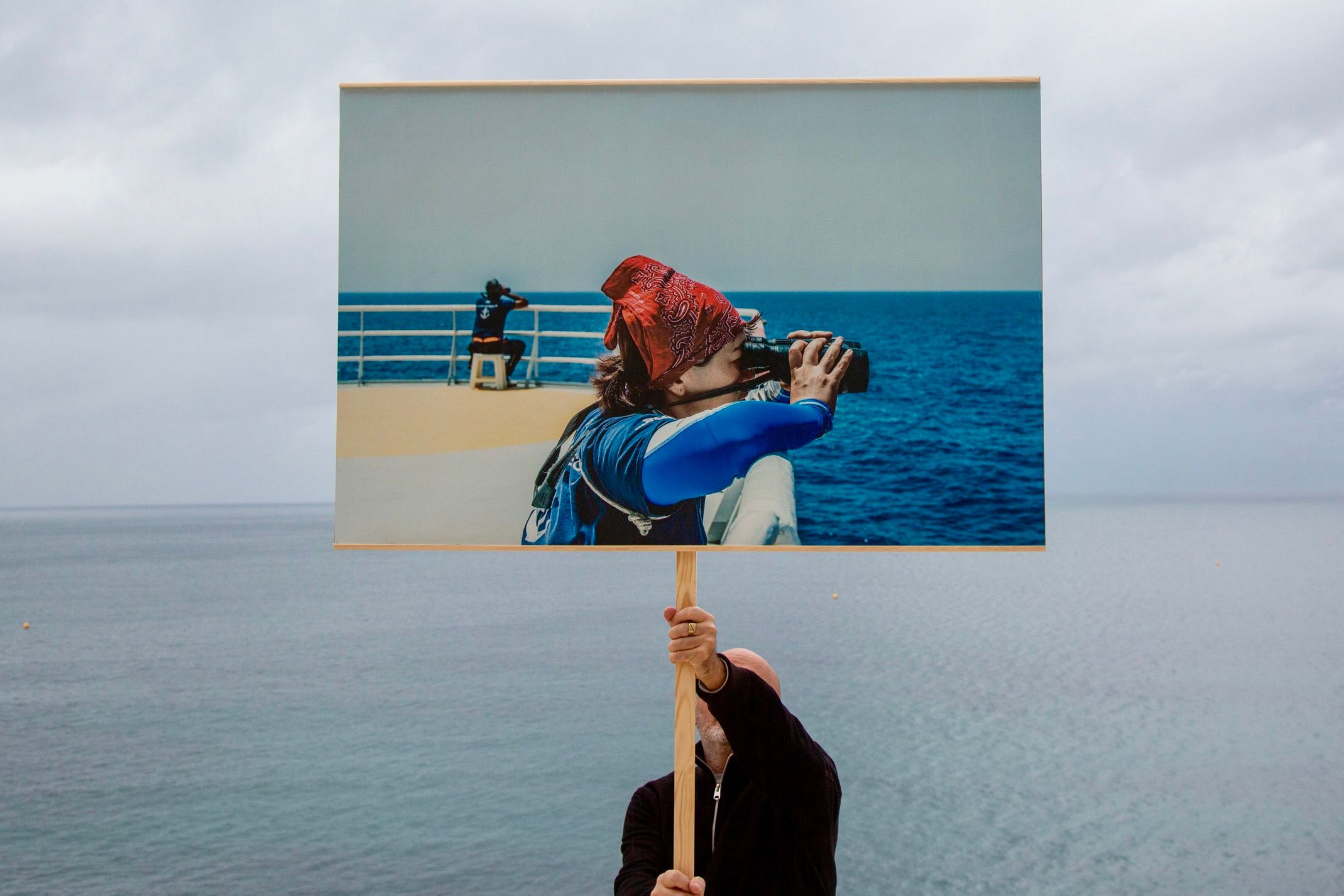
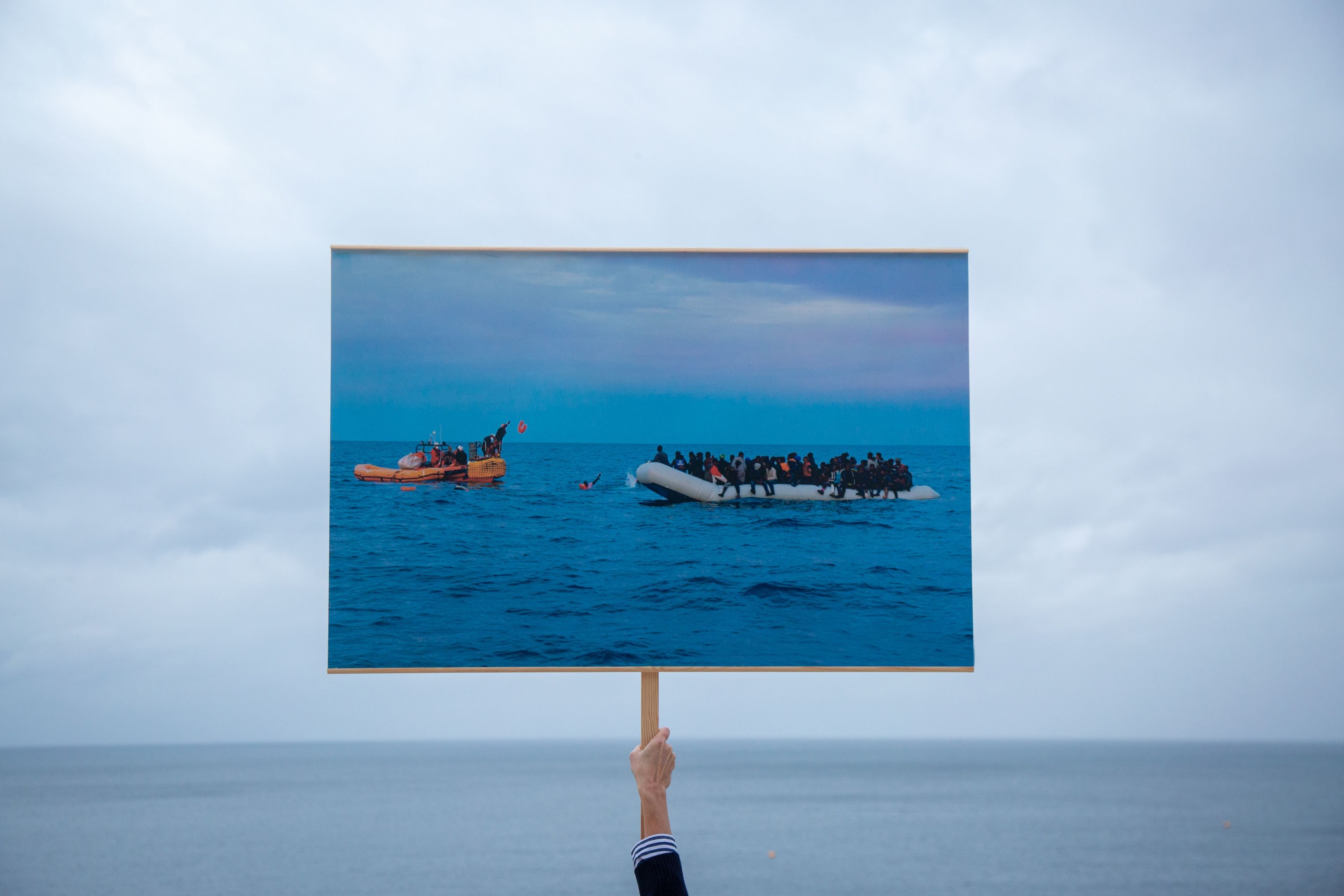
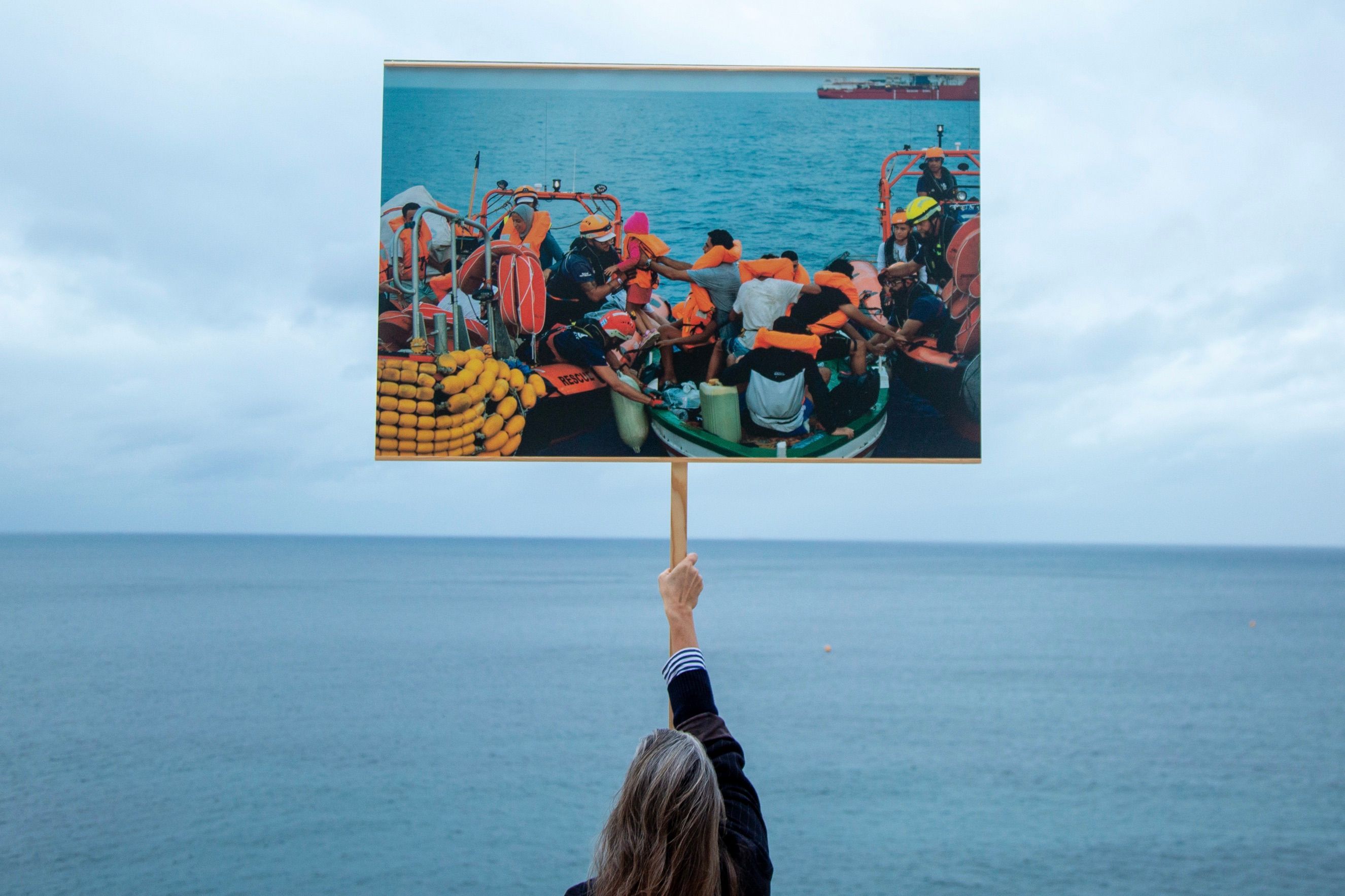
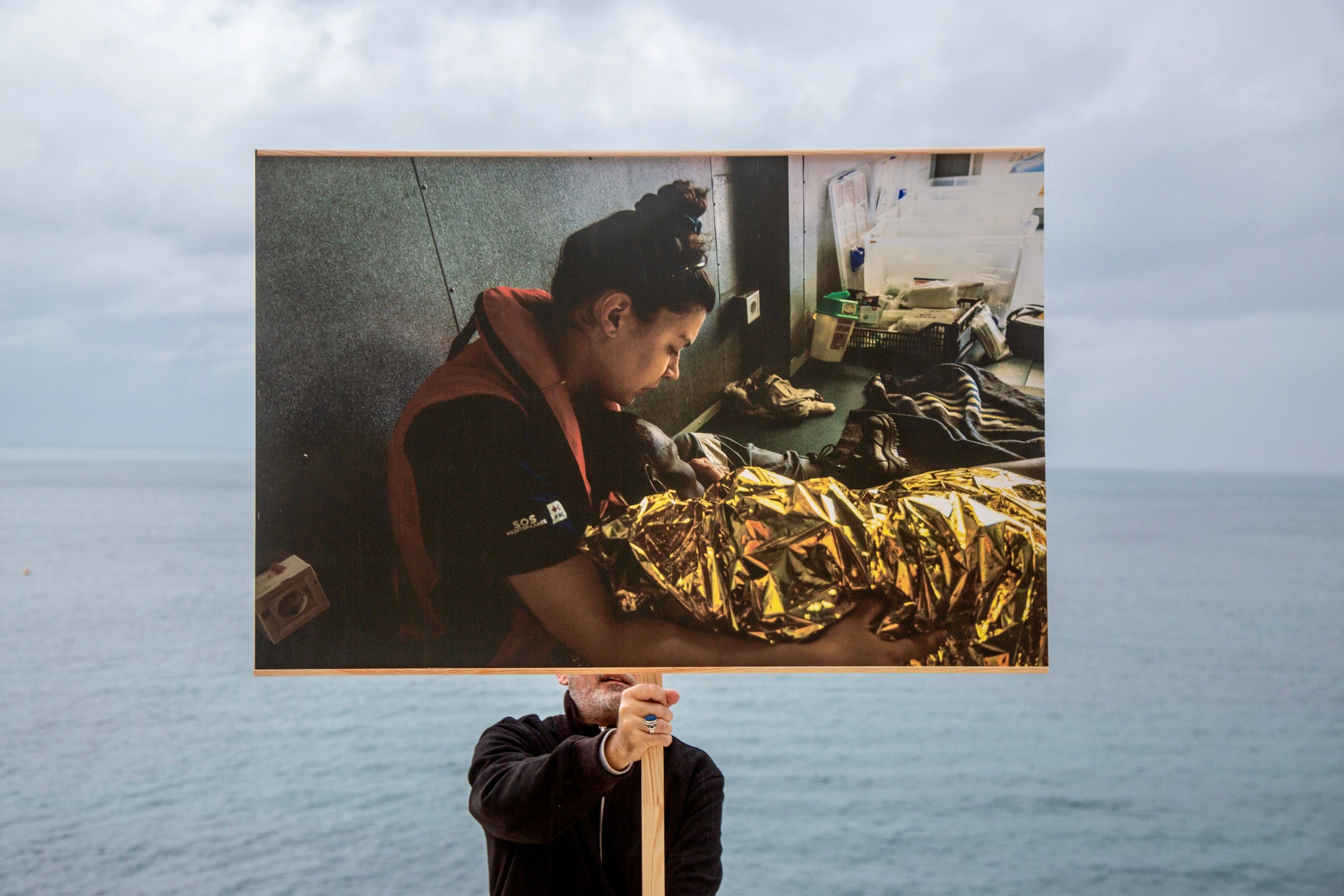
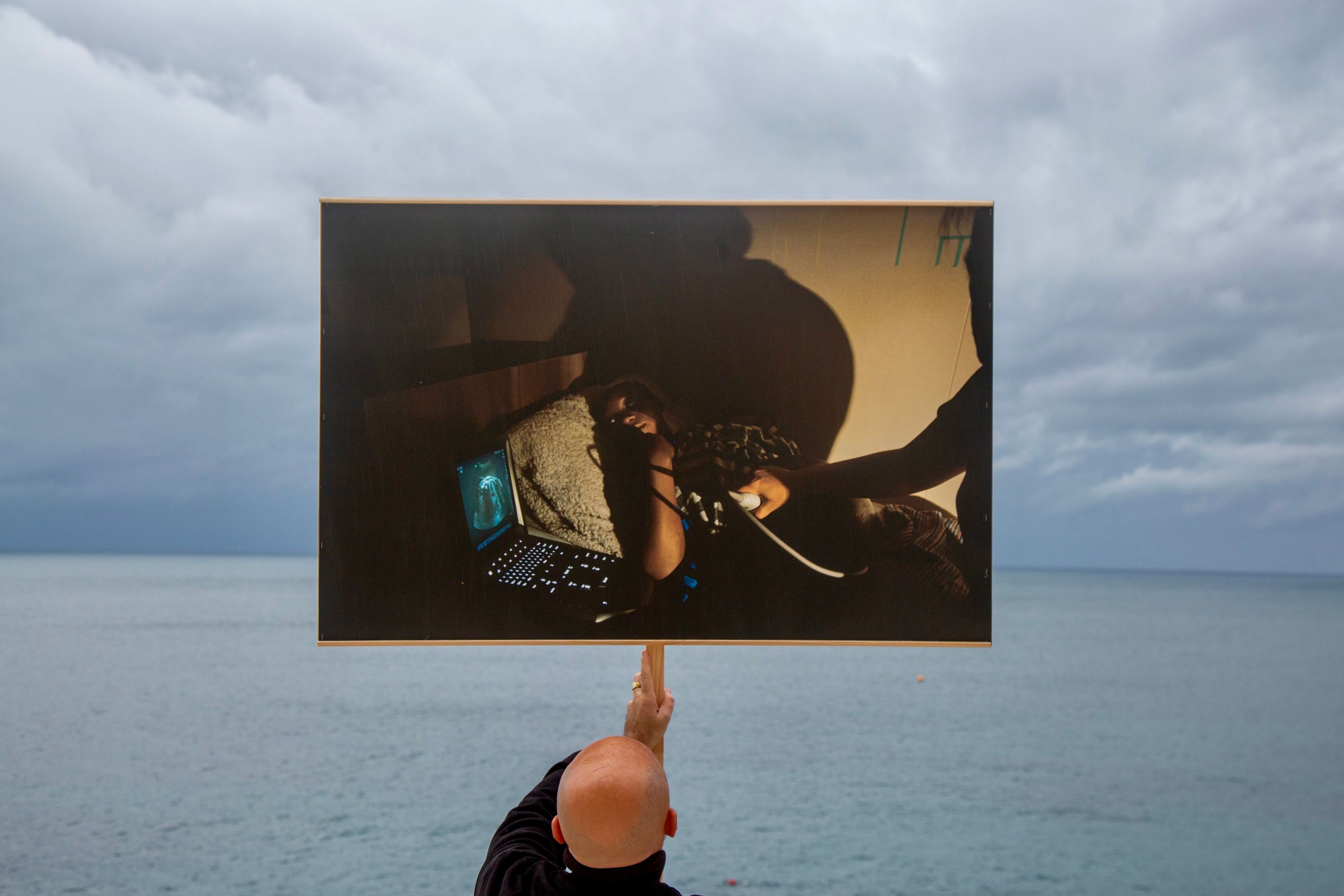
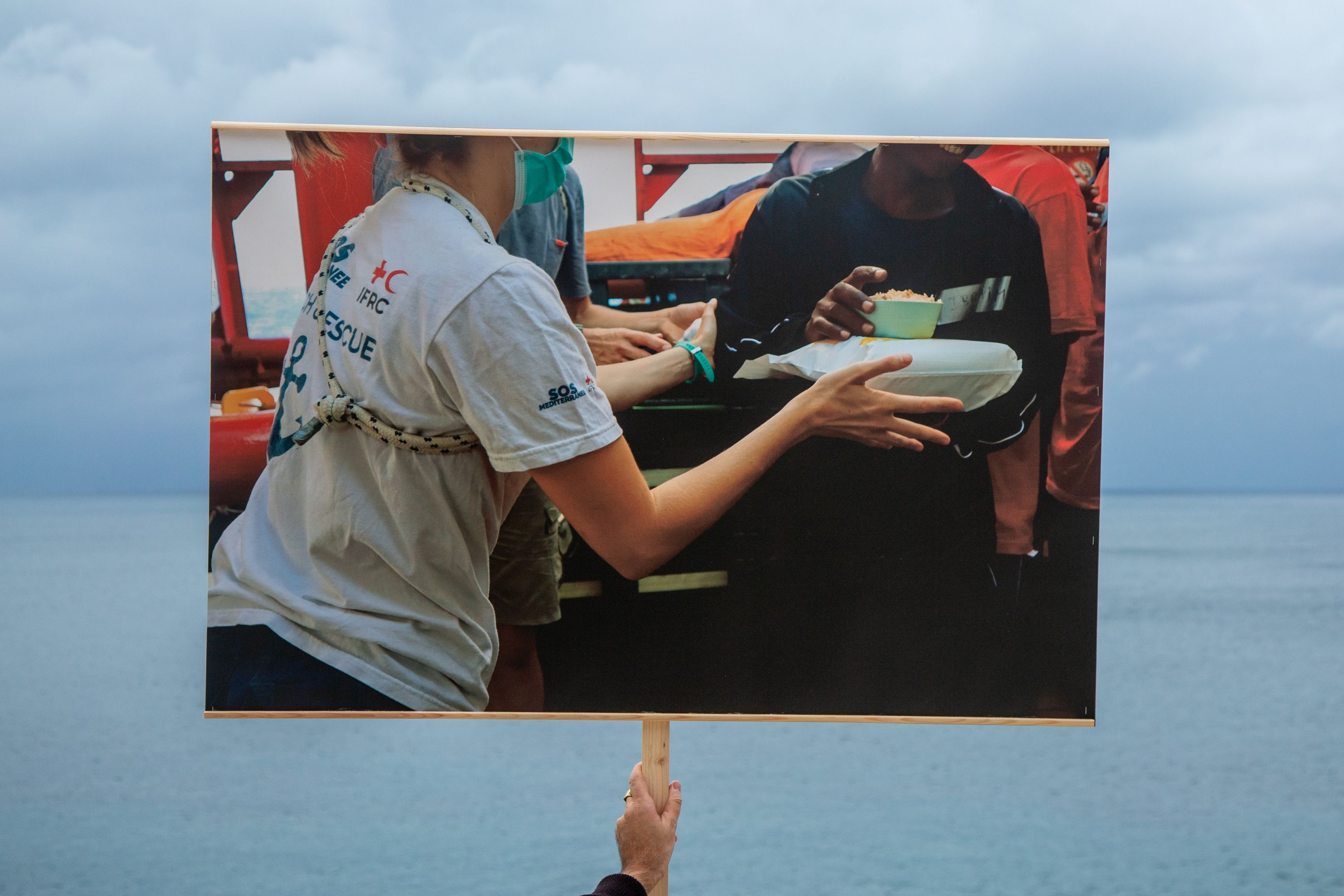
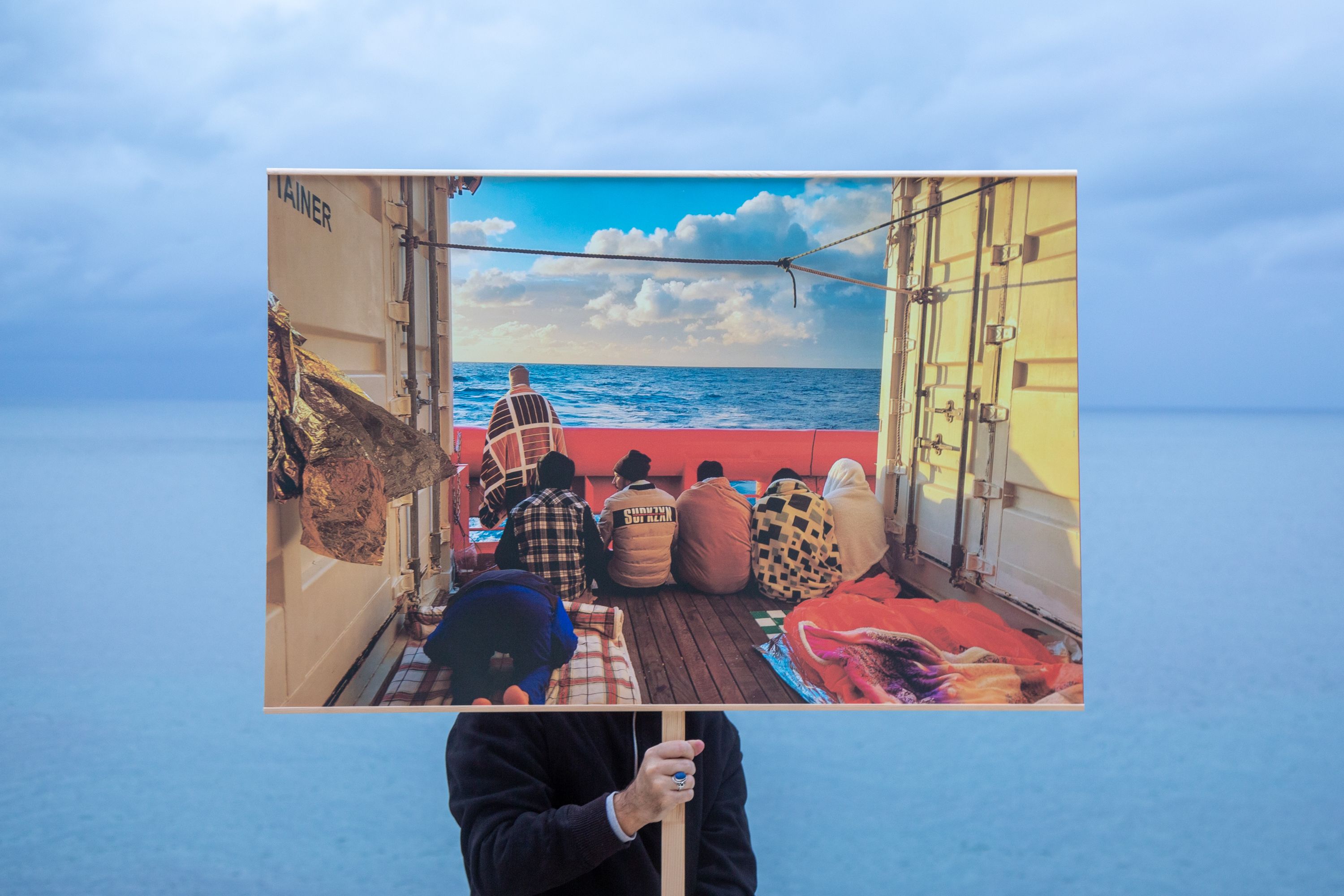
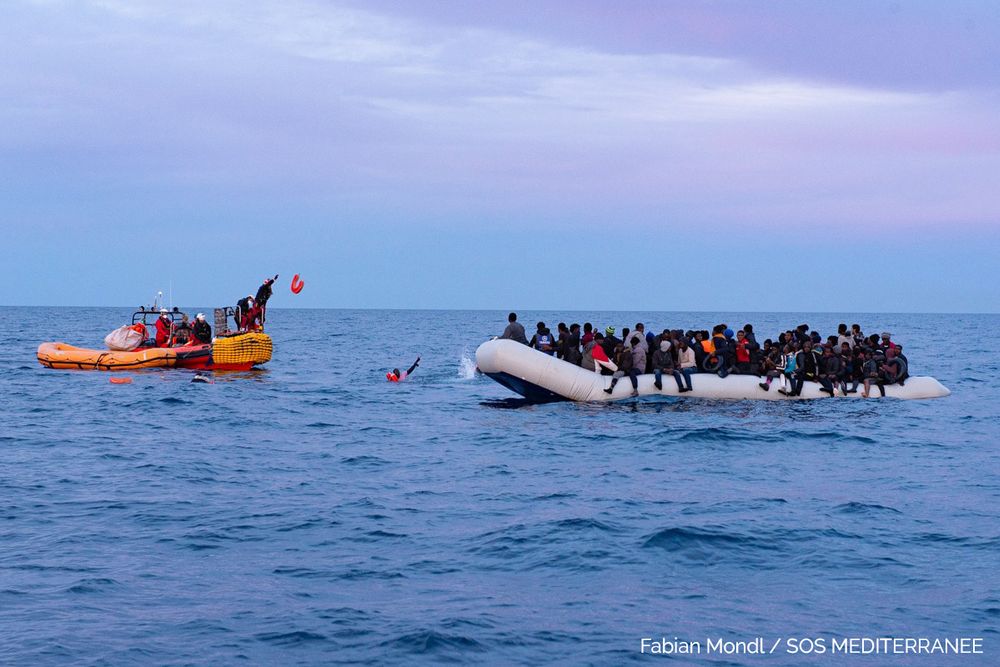
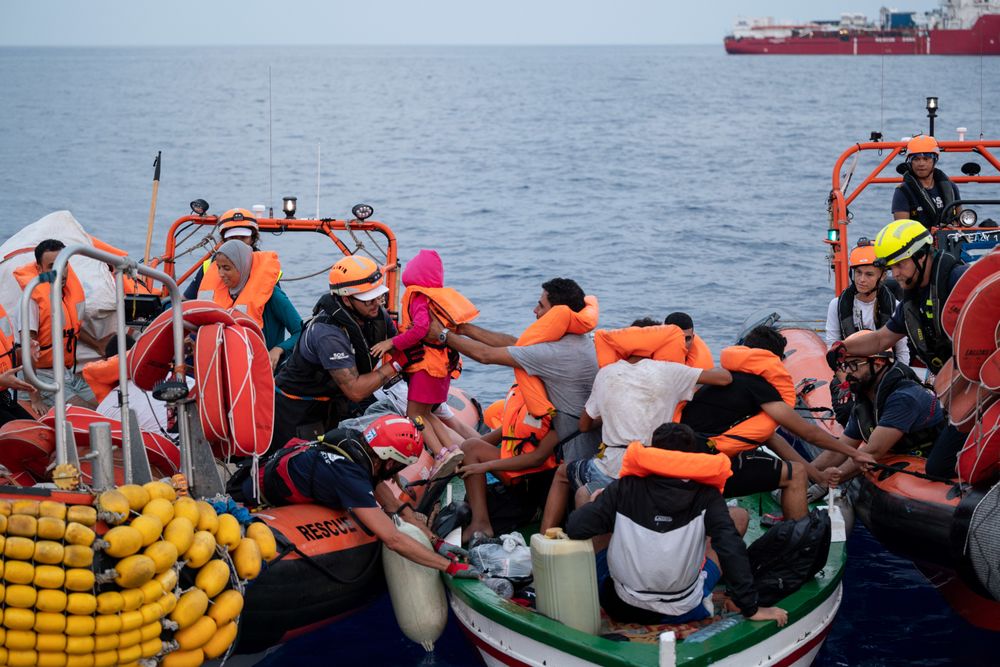
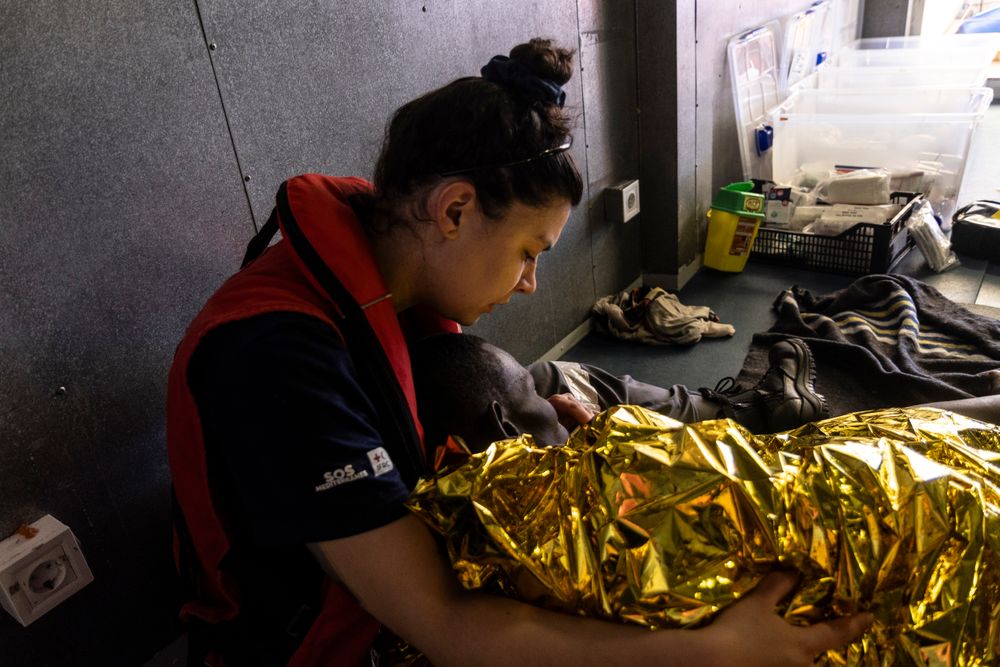
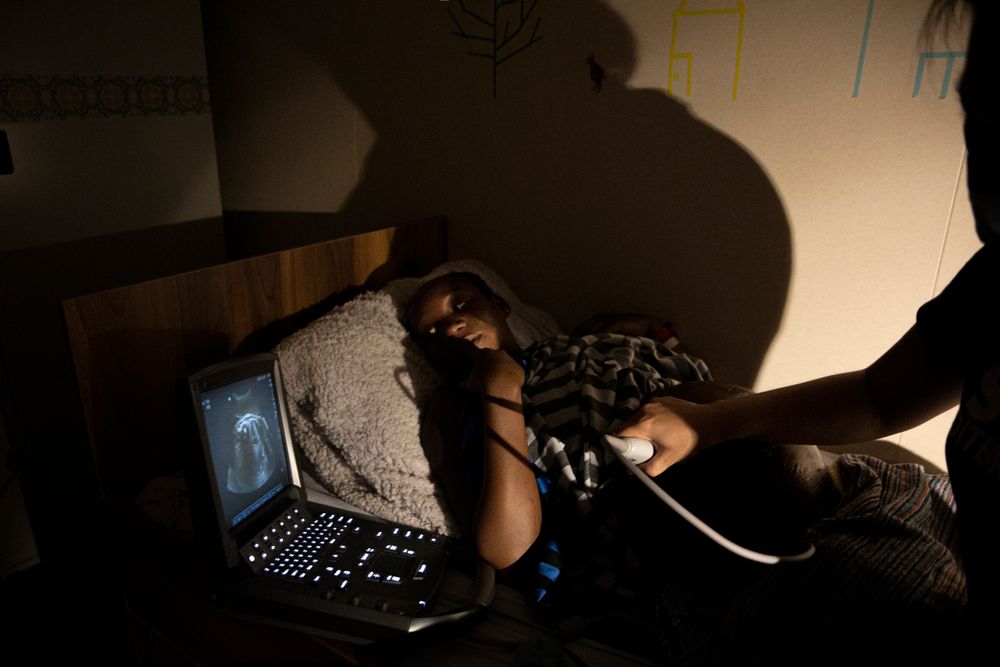
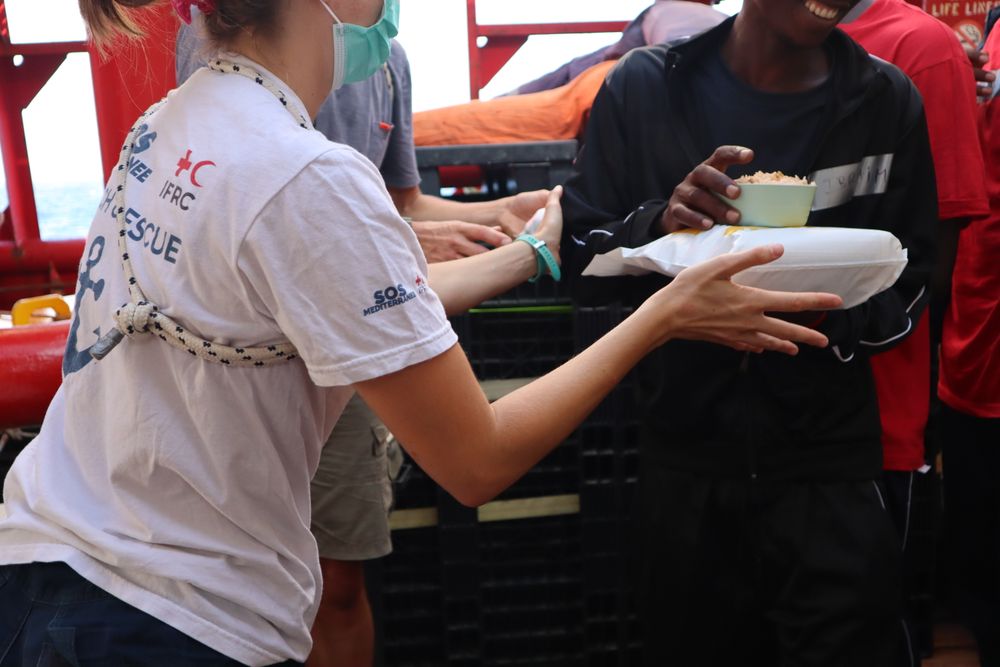
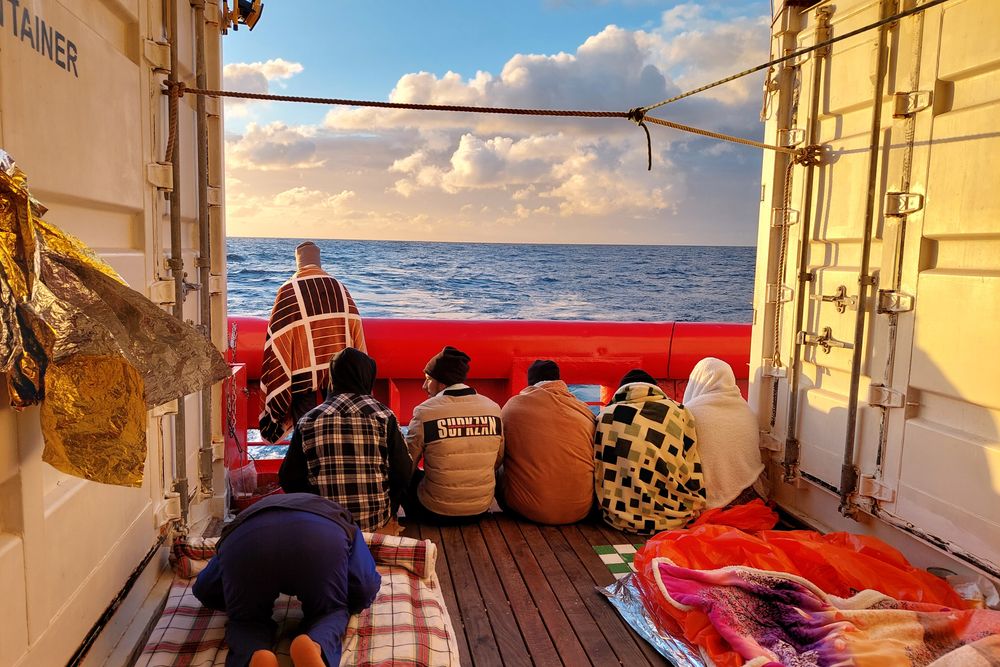
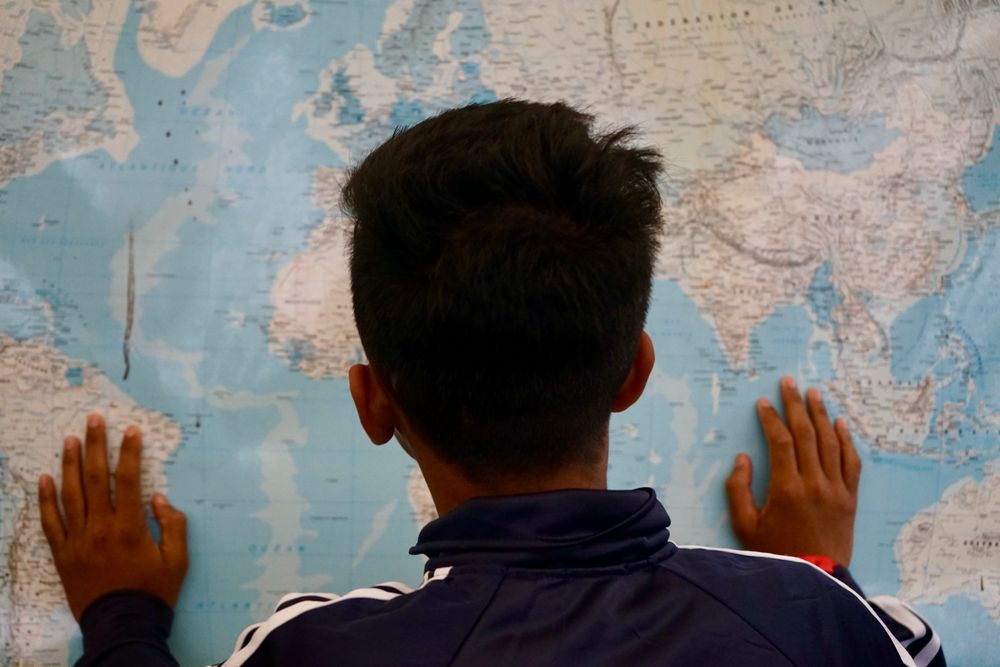
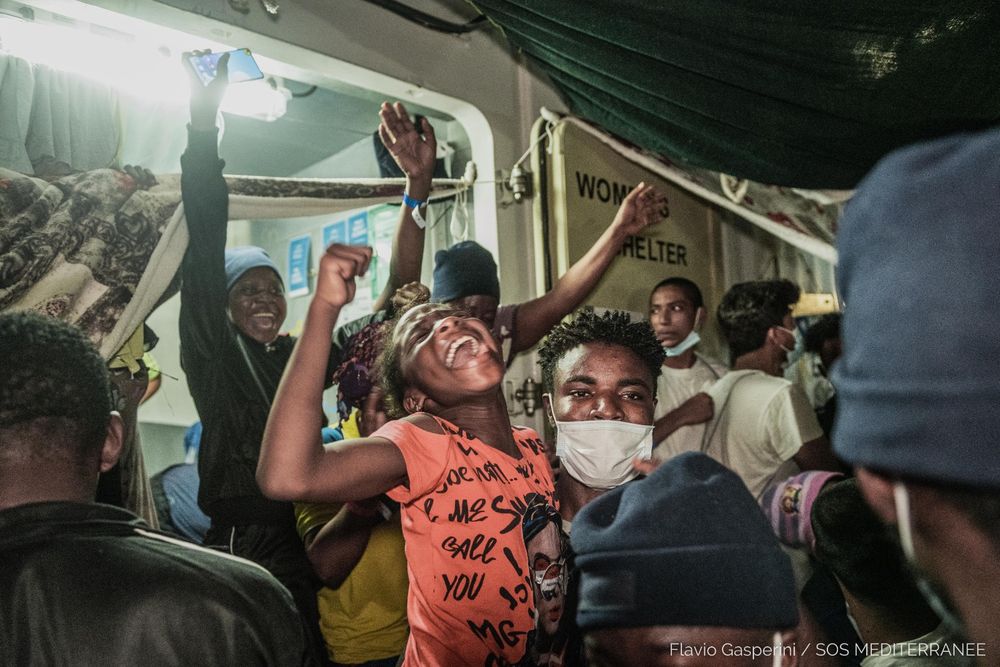
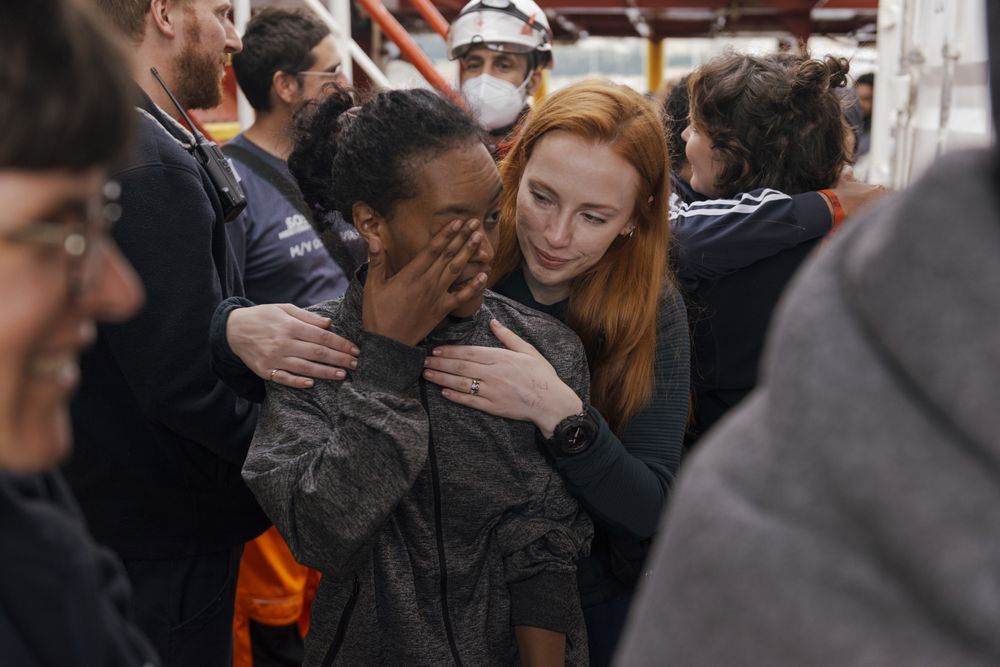
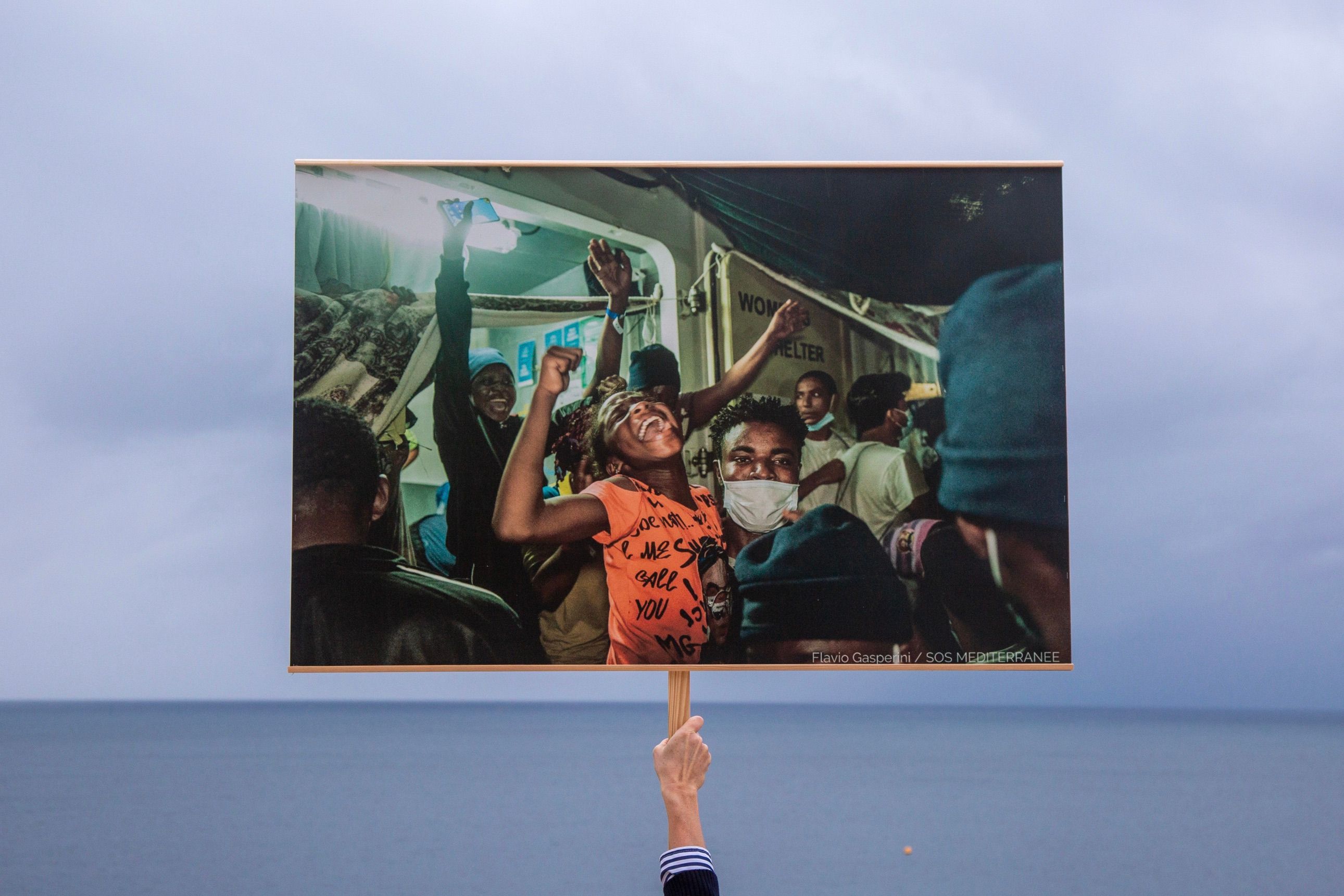
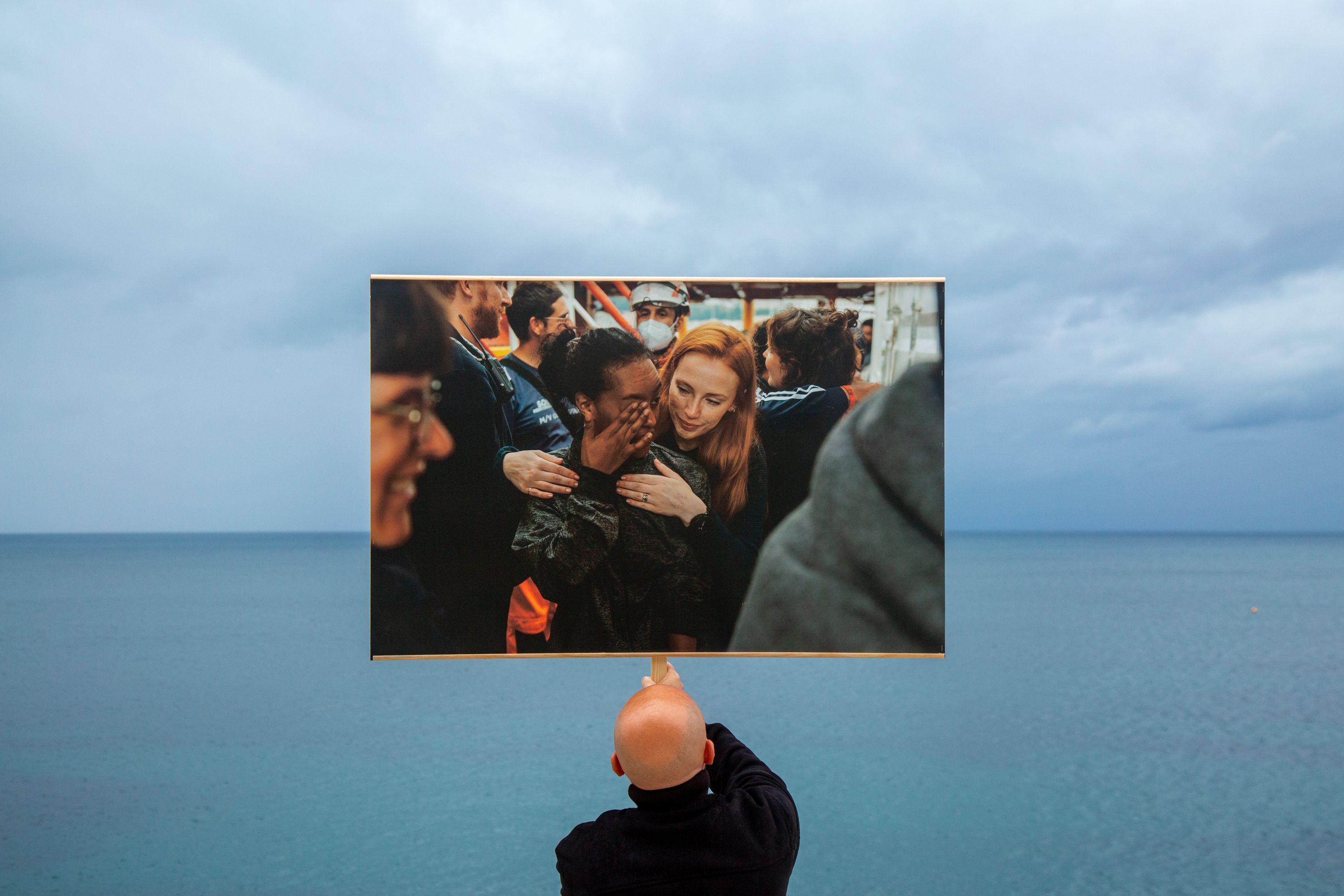
The 10 pictures presented here were selected by one hundred community members invited on 18 and 19 December 2025 in Marseille to review an archive of one hundred pictures from SOS Méditerranée. We chose to focus exclusively on an archive of gestures observed at sea, as these constitute the full repertoire later deployed along the shores. This is reflected in the ten categories associated with the presentation of the archive:
- Going toward
- Rescuing
- Supporting
- Caring
- Sheltering
- Feeding
- Listening
- Guiding
- Sharing
- Embracing.
The 10 selected photographies were unveiled on Friday 19 December at the very edge of the Mediterranean Sea. They were taken by, in order of presentation:
- Flavio Gasperini, July 2021;
- Fabian Mondl, January 2021;
- Stefano Belacchi, August 2023;
- Johanna De Tessières, March 2024;
- Anthony Jean, June 2022;
- Claire Juchat, June 2023;
- Claire Juchat, February 2022;
- Sébastien Thiéry, June 2024;
- Flavio Gasperini, July 2021;
- Javier Alvarez, May 2025.
1 video from 5 to 10 minutes:
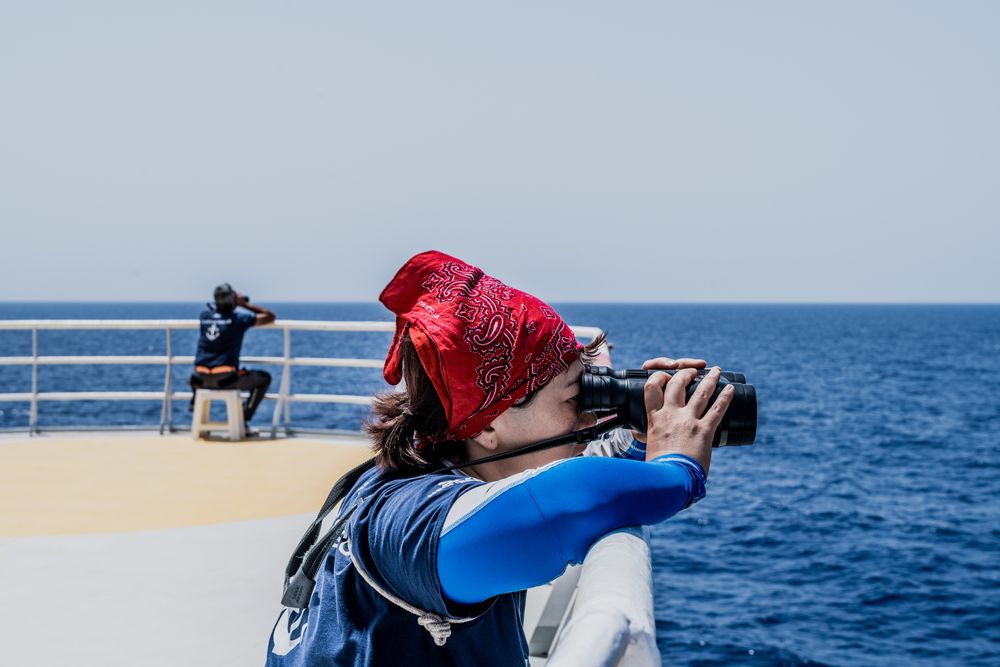
The drafting of this address to UNESCO stems from an urgent necessity: to write a completely different story of what is happening today in order to open up the prospect of a future that is much more liveable. This cannot be achieved by a single instruction, however carefully crafted and well-founded it may be. We must continue to write and rewrite, collectively, the potentialities of our present times in order to make a certain splendour of the times to come conceivable and possible. We therefore propose to keep the cinematographic chapter of this instruction open and perpetually at work: on 10 January 2026, we are presenting a first film for UNESCO, as a kind of protocol: a first, elementary, incomplete object, calling for a multitude of other narratives, texts, languages and representations. By publishing this film, we are simultaneously calling for a thousand other films for UNESCO, lasting 5 to 10 minutes, aimed at highlighting the beauty and significance of acts of hospitality in the Mediterranean Sea and on its shores. In this way, we hope to stimulate research processes within film schools, mobilise filmmakers from here and elsewhere, inspire new programming ideas for film festivals, and thus nurture a new form of writing, at least until this breathable future arrives.
The first film submitted with this application, Nous sommes le Rivage (We are the Shore), directed by Sébastien Thiéry, in collaboration with Anna Recalde Miranda (cinematography and editing) and Jean-Baptiste Lévêque (sound), portrays a number of participants gathered on 18 and 19 December 2025 to select the ten photographies for UNESCO and features the text Des Actes. À Calais et tout autour, a repertoire compiled by PEROU between 2015 and 2017 in collaboration with Antoine Hennion, Amélie Coster and Jean Torrent, published in 2018 (Post-Éditions) and in 2020 (Gasoline).

7. Correspondence
Annex 1 Consent materials
This section brings together letters from organisations and individuals who are currently practising living hospitality and who support this request to UNESCO aimed at protecting and transmitting their practices. These letters describe the gestures to which we are attached and which must be collectively sustained. They were written following the first letter received—that of the Association des usagers de la PADA in Marseille.
We seek to gather many additional letters to include in this collection and therefore invite you to respond to this call for contributions. If, however, you do not wish to write a letter but would prefer to send us a simple signature, please return this document signed to contact@perou-paris.org.
Annex 2 Bibliography
The bibliography assembled here approaches hospitality as a transversal scientific object, situated at the intersection of political philosophy, anthropology, law, sociology and migration studies. Hospitality is not treated as an abstract moral value but as a structuring social, political and cultural practice—historically situated and deeply conflictual.
The corpus highlights a central constitutive tension: that between hospitality as an unconditional ethical demand and hospitality as a conditioned political and legal regime. This tension is analysed not as an aporia, but as the very engine of contemporary debates on welcoming foreigners.
The coherence of the bibliography also rests on a shift in perspective—from hospitality as a normative principle to hospitality as a set of concrete, situated and embodied practices. Particular attention is given to domestic, urban and collective forms of hospitality; to solidarity networks; to sanctuary cities; and to practices of civil disobedience and their criminalisation. Hospitality appears here as a social know-how, often carried by non-state actors, producing common ground and alternative forms of normativity.
Border spaces—especially the Mediterranean—occupy a structuring position within the corpus. They are analysed as contemporary laboratories of hospitality where both the collapse of institutional reception mechanisms and the invention of transnational solidarity practices become visible. These territories are approached not as margins, but as central sites for understanding current transformations in European societies.
Finally, the bibliography consistently articulates hospitality, solidarity and responsibility, avoiding a purely compassionate or strictly legal reduction of welcome. It opens toward an understanding of hospitality as a living cultural practice—transmitted, reinterpreted and reactivated across diverse social and historical contexts.
As such, this corpus constitutes a solid scientific foundation for envisaging the recognition of living hospitality gestures in the Mediterranean Sea and along its shores as a fundamental contemporary social practice, fully within the scope of intangible cultural heritage as defined by the 2003 Convention.
- AGIER Michel, Gérer les indésirables, Flammarion, 2008
- AGIER Michel, BALIBAR Etienne, BUTLER Judith, COHEN-SÉAT Patrice, TASSIN Etienne et OTTO WOLF Frieder, « Pas d’alternative: Droit d’asile, ou barbarie. » Le Monde, 11 mars 2016
- AGIER Michel, L’Étranger qui vient : repenser l’hospitalité, Seuil, Paris, 2018
- AGIER Michel, GERBIER-AUBLANC Marjorie, MASSON-DIEZ Évangeline (dir.), Hospitalité en France : Mobilisations intimes et politiques, Paris : Le Passager Clandestin, Bibliothèque des frontières, 2019
- AGIER Michel, Les Migrants et nous. Éloge de Babel, CNRS Éditions, 2023
- ALLSOPP Jennifer, « Contesting Fraternité: VulnerableMigrants and the Politics of Protection in Contemporary France. » Refugee Studies CentreWorking Paper Series 82: 1–37, 2012
- AMIGONI Livio, ARU Silvia, BONNIN Ivan, PROGLIO, and VERGNANO Cecilia, Debordering Europe: Migration and Control Across the Ventimiglia Region. Cham: Palgrave Macmillan, 2021
- ANDERSON Elizabeth, The Imperative of Integration. Princeton/Oxford: Princeton University Press, 2010
- ASTOLFO Giovanna and BOANO Camillo, « Notes around hospitality as inhabitation: Engaging with the politics of care and refugees, dwelling practices in the Italian urban context », Migration and Society 3, no. 1, June 1, 2020
- ATAÇ Ilker, RYGIEL Kim, STIERL Maurice Stierl, « Building Transversal Solidarities in European Cities: Open Harbours, Safe Communities, Home. » Critical Sociology 47 (6): 923–939, 2021
- BABELS (collectif), L’Hospitalité en France – Mobilisations intimes et politiques, le Passager Clandestin, 2019
- BAGELMAN Jennifer, « Sanctuary and Unsettling ‘the’ Refugee Crisis. » In In The Oxford Handbook of Migration Crises, edited by Cecilia Menjívar, Marie Ruiz, and Immanuel Ness, 743–758. New York: Oxford University Press, 2019
- BAKER Gideon, « Right of entry or right of refusal? Hospitality in the law of nature and nations », Review of International Studies 37, no. 3, 2011
- BAKER Gideon, Hospitality and world politics, Basingstoke: Palgrave Macmillan, 2013
- BALIBAR Étienne, « Pour un droit international de l’hospitalité », Le Monde, 17 août 2018
- BARRY Brian, « Humanity and justice in global perspective », Nomos, « Ethics, economics, and the law », n° 24, p. 219-252, 1982
- BAUBÖCK Rainer et PERMOSER Julia, « Sanctuary, Firewalls, Regularisation: Three Inclusive Responses to the Presence of Irregular Migrants. Journal of Ethnic and Migration Studies, 2023
- BAUDER Harald and JUFFS Lorelle, « Solidarity’ in the migration and refugee litterature: analysis of a concept », Journal of Ethnic and Migration Studies 46, no. 1, 2020
- BELL Avril, « Being ‘at home’ in the nation: Hospitality and sovereignty in talk about immigration,” Ethnicities 10, no. 2, 2010
- BENHABIB Seyla, The rights of others: aliens, residents, and citizens, Cambridge: Cambridge University Press, 2004
- BENHABIB Seyla, Another cosmopolitanism: Hospitality, sovereignty, and democratic iterations, Oxford: Oxford University Press, 2006
- BESSONE Magali, « Le vocabulaire de l’hospitalité est-il républicain ? », Éthique publique, vol. 17, n° 1, 2015
- BESSONE Magali, « L’(in)achèvement de l’hospitalité », Esprit, n° 446, p. 158-165, 2018
- BLUNT Gwilym David, « Illegal immigration as resistance to global poverty », Raisons politiques, n° 69, p. 83-99, 2018
- BERG Mette Louise Berg and FIDDIAN-QASMIYEH, « Encountering hospitality and hostility », Migration and Society 1, no. 1, 2018
- BOLTANSKI Luc, La Souffrance à distance. Morale humanitaire, médias et politique, Gallimard, Paris, 2007
- BOUCHERIN Patrick, « Migrants, mémoire du monde. » La Croix, 17 septembre 2015
- BOUDOU Benjamin, « Éléments pour une anthropologie politique de l’hospitalité », Revue du MAUSS semestrielle, n° 40, p. 267-284, 2012
- BOUDOU Benjamin, « Au nom de l’hospitalité : les enjeux d’une critique morale en politique », Cités, n° 68, p. 31-46, 2016
- BOUDOU Benjamin, « À l’épreuve de l’altérité radicale: Une expérience de pensée. » Le Philosophoire 46 (2): 199–220, 2016
- BOUDOU Benjamin, Politique de l’hospitalité. Une généalogie conceptuelle, Paris, Cnrs Éditions, 2017
- BOUDOU Benjamin, Le Dilemme des frontières. Éthique et politique de l’immigration, Paris, Ehess, 2018
- BOUDOU Benjamin, « Y a-t-il des frontières légitimes ? », AOC média, 20 juin 2018
- BOUDOU Benjamin, « The solidarity offense in France: Egalité, Fraternité, Solidarité! » Verfassungsblog: On Matters Constitutional (blog). 2018.
- BOUDOU Benjamin, « Pourquoi n’accueillez-vous pas des migrants chez vous? », Définir le devoir d’hospitalité,” La Revue du MAUSS 53, 2019
- BOUDOU Benjamin, « An urban turn in the ethics of migration? » Raisons Politiques N°79 (3): 105–117, 2020
- BOUDOU Benjamin, « Migration and the duty of hospitality: a genealogical sketch. » Transitions: Journal of Transient Migration 4 (2): 257–274, 2020
- BOUDOU Benjamin, « Beyond the welcoming rhetoric: Hospitality as a principle of care for the displaced. » Essays in Philosophy 22 (1/2): 85–101, 2021
- BOUDOU Benjamin, LEMAN Hans and SCHOLZ Max, « Sacred welcomes: how religious reasons, structures, and interactions shape refugee advocacy and settlement », Migration and Society 4, 2021
- BOWPITT Graham, DWYER Peter Dwyer, SUNUDIN Eva Sundin, and WEINSTEIN Mark, « Places of sanctuary for ‘the undeserving’? Homeless people’s day centres and the problem of conditionality. » British Journal of Social Work 44 (5): 1251–1267, 2014
- BRUGÈRE Fabienne, LE BLANC Guillaume, La Fin de l’hospitalité. Lampedusa, Lesbos, Calais… jusqu’où irons-nous ?, Paris, Flammarion, 2017
- BRUN Catherine, « Hospitality: becoming ‘IDPs’ and ‘Hosts’ in protracted displacement », Journal of Refugee Studies 23, no. 3, 2010
- BRUNKHORST Hauke, Solidarity: from civic friendship to a global legal community, translated by Jeffrey Flynn. Cambridge, Mass: MIT Press, 2005
- BROWN Garrett W., « The laws of hospitality, asylum seekers and cosmopolitan right: a Kantian response to Jacques Derrida », European Journal of Political Theory 9, no. 3, 2010
- BUFF Rachel Ida, « Sanctuary Everywhere. » Radical History Review 2019 (135): 14–42, 2019
- BULLEY Dan, A relational ethics of immigration: Hospitality and hostile environments, Oxford University Press, 2024
- BULLEY Dan, Migration, ethics, and power: spaces of hospitality in international politics, Londres, Sage, 2017
- CAMELIN Sylvaine, « Une hospitalité sous contrôle », L’Homme, Revue Française d’anthropologie, n° 231-232, 2019
- CANEY Simon, « Responding to global injustice: on the right of resistance », Social Philosophy and Policy, vol. 32, n° 1, p. 51-73, 2015
- CARENS Joseph, The Ethics of Immigration, Oxford, Oxford University Press, 2013
- CARLIER Louise, « Experience of Urban Hospitality: An Ecological Approach to the Migrants’ World. » Urban Planning 5 (3): 241–51, 2020
- CARNEY Megan, GOMEZ Ricardo, MITCHELL Katharyne, and VANNINI Sara, « Sanctuary Planet: A Global Sanctuary Movement for the Time of Trump. » Socity and Space (Blog). Accessed 16 May 2017.
- CARPI Estella, and PIINAR SENOGUZ Hatice, « Refugee Hospitality in Lebanon and Turkey: On Making ‘The Other. » International Migration 57 (2): 126–42, 2019
- CARRIÈRE Jean-Marie, « The Refugee experience as existential exile: hospiality as a spiritual and political response », in The refugee crisis and religion: secularism, security and hospitality in question, eds. Luca Mavelli and
- Erin K. Wilson, London; New York: Rowman & Little, 2017
- CAVALLAR Georg, « Vitoria, Grotius, Pufendorf, Wolff and Vattel: accomplices of European colonialism and exploitation or true cosmopolitans ? », Journal of the History of International Law, vol. 10, n° 2, p. 181-209, 2008
- CAVALLAR Georg, The Rights of strangers: Theories of international hospitality, the global community and political justice since Vitoria. Farnham: Ashgate, 2002
- CHAMBERLAIN James A., « Responsibility for Migrants: From Hospitality to Solidarity. » Political Theory 48 (1): 57–83. 2020
- CHETAIL Vincent, « Sovereignty and migration in the doctrine of the Law of Nations: An intellectual history of hospitality from Vitoria to Vattel », European Journal of International Law 27, no. 4, 2016
- COHEN Gerald Allan, « Political philosophy and personal behavior: If you’re an egalitarian, how come you’re so rich ? », in Cohen G. A., If You’re an Egalitarian, How Come You’re So Rich ?, Harvard University Press, Cambridge/Londres, 2000
- COHN-bendit Daniel, GOUPIL Romain, « Pour un nouvel ordre de l’hospitalité », Libération, 18 avril 2018
- COSNAY Marie, POTTE-BONNEVILLE Mathieu, Voir Venir. Écrire l’hospitalité, Stock, 2019
- COUTANT Isabelle, Les Migrants en bas de chez soi, Seuil, Paris, 2018
- CUTTITA Paolo, « Borderizing the island: Setting and narratives of the Lampedusa border play. » ACME: An International Journal for Critical Geographies 13 (2): 196–219, 2014
- DARLING Jonathan, and BAUDER Harald, Sanctuary Cities and Urban Struggles: Rescaling Migration, Citizenship, and Rights. Manchester: Manchester University Press, 2019
- DARLING Jonathan, « Hosting the Displaced: From Sanctuary Cities to Hospitable Homes. » In The Handbook of Displacement, edited by Peter Adey, Janet Bowstead, Katherine Brickell, Vandana Desai, Mike Dolton, Alasdair Pinkerton, and Ayesha Siddiqi, 785–798. Cham: Palgrave Macmillan, 2020
- DE BONO Daniela, « Plastic hospitality: the empty signifier at the EU’s Mediterranean border. » Migration Studies 7 (3): 340–61, 2019
- DECKMYN Chantal, Lire la ville. Manuel pour une hospitalité de l’espace public, La Découverte, 2020
- DELEIXHE Martin, Aux bords de la démocratie : contrôles des frontières et politique de l’hospitalité, Paris, Classiques Garnier, 2016
- DÉLANO ALONSO Alexandra, « Sanctuary in countries of origin: a transnational perspective. » Migration and Society 4 (1): 84–98, 2021
- DELMAS-MARTY Mireille, Résister, responsabiliser, anticiper, ou comment humaniser la mondialisation, Seuil, 2013
- DELMAS-MARTY Mireille, « Pour une gouvernance mondiale du droit des migrations », Le Monde, 14 avril, 2018
- DERRIDA Jacques, DUFOURMONTELLE Anne, De l’hospitalité, Calmann-Lévy, Paris, 1997
- DERRIDA Jacques, « Responsabilité et hospitalité. » In Autour de Jacques Derrida, de l’hospitalité: Manifeste, ed. Mohammed Seffahi, 111–24. Genouilleux: La Passe du vent, 2001
- DE SHALIT Avner, Cities and Immigration: Political and Moral Dilemmas in the New Era of Migration. Oxford, UK: Oxford University Press, 2018
- DEVEREAUX Ryan, « Criminalizing compassion: the unraveling of the conspiracy case against no more deaths volunteer » The Intercept (Blog). Accessed 10 August 2019
- DIMITRIADI Angeliki and MALAMIDIS Haris, eds., « Hospitality in civil society: practices during the European refugee crisis,’ Briefing paper, Novamigra, 020
- DONADIO Giacomo, « The irregular border: theory and praxis at the border of Ventimiglia in the Schengen age. » In Debordering Europe: migration and control across the Ventimiglia region, edited by Livio Amigoni, Silvia Aru, Ivan Bonnin, Gabriele Proglio, and Cecilia Vergnano, 109–133. Cham: Palgrave MacmillaN, 2021
- ELIA Anna et JOVELIN Emmanuel, Sociologie de l’(in)hospitalité: de la Jungle de Calais à Riace, Du Cygne Éditions, 2025
- FEKETE Liz, « Migrants, borders and the criminalisation of solidarity in the EU », Race & Class 59, no. 4, 2018
- FIDD IAN-QASMIYEH Elena, « Refugees hosting refugees », Forced Migration Review, n° 53, p. 25-27, 2016
- FILIPPI Davide, GILIBERTI Luca, and QUEIROLO PALMAS Luca Queirolo, « From Lampedusa to the Susa
- Valley: solidarity networks in two border battlegrounds. » Journal of Modern Italian Studies 26 (5): 608–626, 2021
- FURRI Filippo, KOBELINSKY Carolina, Relier les rives. Sur les traces des morts en Méditerranée, La Découverte, 2024
- GENARD Jean-Louis, « Pourquoi l’hospitalité ? », SociologieS, 2018
- GERBIER-AUBLANC Marjorie, « Un migrant chez soi », Esprit, n° 446, p. 122-129, juillet-août 2018
- GERBIER-AUBLANC Marjorie et MASSON-DIEZ Évangeline, « Être accueilli chez l’habitant : de l’hébergement-épreuve à la cohabitation-tremplin pour les migrants », dans Cahiers de Rhizome n° 71, avril 2019.
- GERBIER-AUBLANC Marjorie et MASSON-DIEZ Évangeline, « Jeunes en exil », dans Hommes & migrations n° 1333, avril-juin 2021, Musée national de l’histoire de l’immigration
- GIBNEY Matthew, « The duties of refugees », in The political philosophy of refuge, ed. David Miller and Christine Straehle, Cambridge; New York: Cambridge University Press, 2019
- GIBSON Sarah, « Abusing our hospitality: inhospitableness and the politics of deterrence », in Mobilizing Hospitality: the ethics of social relations in a mobile world, eds. MOLZ Jennie Germann GIBSON and Sarah, London: Routledge, 2007
- GILIBERTI Luca, « La militarisation de la frontière franco-italienne et le réseau de solidarité avec les migrant·e·s dans la Vallée de la Roya. » Mouvements 93 (1): 149–155. 2018
- GILIBERTI Luca, and QUEIROLO PALMAS Luca, « Solidarities in transit on the French-Italian border: ethnographic accounts from Ventimiglia and the Roya valley. » In Migration, Borders and Citizenship: Between Policy and Public Spheres. Migration, Diasporas and Citizenship, edited by Maurizio Ambrosini, Manlio Cinalli, and David Jacobson, 109–140. Cham: Palgrave Macmillan, 2020
- GLATZER Miguel, and CARR-LEMKE Tara, « Accompanying the stranger in a context of political impasse and constraints: new sanctuary movement Philadelphia. » In Global Change and Human Mobility, edited by Josefina Domínguez-Mujica, 183–202. New York: Springer, 2016
- GOODIN Robert, Protecting the Vulnerable: A Reanalysis of our Social Responsibilities, The University of Chicago Press, Chicago/Londres, 1985
- GOTMAN Anne, Le sens de l’hospitalité, PUF, 2001
- GRAZIANI Romain, « Migrants: écoutons la leçon d’Ulysse. » Le Monde, 9 septembre 2015
- GROTTI Vanessa et BRIGHTMAN Marc, Migrant hospitalities in the mediterranean: encounters with alterity in birth and death, Palgrave Macmillan. 2021
- GULASEKARAM Pratheepan, CUISON VILLAZOR Rose, and SU Rick, « Anti-sanctuary and immigration localism. » Columbia Law Review 119 (3): 836–894, 2019
- HAMANN Ulrike, KARAKAYALI Serhat, « Practicing Willkommenskultur: migration and solidarity in Germany », Intersections, vol. 2, n° 4, p. 69-86, 2016
- HERROU Cédric, Change Ton Monde. Paris: Les Liens qui libèrent, 2020
- HERZFELD Michael, « As in your own house: hospitality, ethnography, and the stereotype of Mediterranean society. » In Honor and Shame and the Unity of the Mediterranean, edited by David Gilmore, 75–89. Washington, D.C: American Anthropological Association, 1987
- HOLZBERG Billy, « Wir Schaffen Das’: Hope and Hospitality beyond the humanitarian Border. » Journal of Sociology 57 (3): 743–59, 2021
- HUNG Carla, « Sanctuary squats: the political contestations of Piazza Indipendenza refugee occupiers. » Radical History Review 2019 (135): 119–137, 2019
- INTERNATIONAL RESCUE COMMITTEE, « Urban refuge: how cities are building inclusive communities. » Rescue.org., 2018
- JACOBS Jessica, « Simple hospitality could be the answer to the european migrant crisis », The Conversation, August 18, 2015
- JELINEK Elfriede, Les Suppliants, trad. par Magali Jourdan et Mathilde Sobottke, Paris, L’Arche, 2016
- KAGAN Michael, « What we talk about when we talk about sanctuary cities. » UC Davis Law Review 51: 391–406, 2018
- KAUFMANN David, RÄSS Nora, STREBEL Dominique, SAGER and Fritz, « Sanctuary cities in Europe? A Policy Survey of Urban Policies in Support of Irregular Migrants. » British Journal of Political Science 52 (4): 1954–1963, 2022
- KELZ Rosine, « Political theory and migration concepts of non-sovereignty and solidarity », Movements. Journal Für Kritische Migrations—Und Grenzregimeforschung 1, no. 2, 2015
- KNOPS Louise SEVERS and Eline, « Self-Appointed representatives on Facebook: the case of Belgian citizen’s platform for refugee support », International Journal of Communication 13, 2019
- KOBELINSKY Carolina, L’Accueil des demandeurs d’asile. Une ethnographie de l’attente, Paris, Éditions du Cygne, 2010
- KOLERS Avery, A moral theory of solidarity. First edition. Oxford: Oxford University Press, 2016
- KRON Stefanie, and LEBUHN Henrik, « Building solidarity cities: from protest to policy. », In Fostering pluralism through solidarity activism in Europe: everyday encounters with newcomers, edited by Feyzi Baban, and Kim Rygiel, 81–105. New York: Palgrave Macmillan, 2020
- LASHLEY Conrad ed., The routledge handbook of hospitality studies, London: Routledge, 2017
- LENARD Patti Tamara, « The ethics of sanctuary policies in liberal democratic states. » In The Political Philosophy of Refuge, edited by David Miller, and Christine Straehle, 231–251, Cambridge: Cambridge University Press, 2019
- LENDARO Annalisa, « Désobéir en faveur des migrants: Répertoires d’actions à la frontière franco-italienne. » Journal Des Anthropologues 152–153: 171–192, 2018
- LIEBE Ulf et al., « From welcome culture to welcome limits? Uncovering preference changes over time for sheltering refugees in Germany », PLOS ONE 13, no. 8, 2018
- MACKLIN Audrey, « Working against and with the State: from sanctuary to resettlement. » Migration and Society 4 (1): 31–46, 2021
- MANCILLA Alejandra, The right of necessity : moral cosmopolitanism and global poverty, Rowman and Littlefield, Londres/New York, 2016
- MASSON-DIEZ Évangeline, « Militants, bénévoles, citoyens solidaires», dans Journal des anthropologues, Hors-série 2018
- MASSON-DIEZ Évangeline, « L’hospitalité privée de “mineurs isolés étrangers” : une relation à définir », dans Jordan Pinel (dir.), dossier Hospitalité et migration, e-Migrinter n° 20, 2020
- MASSON-DIEZ Évangeline, Éprouver l’hospitalité privée : l’accueil chez soi du jeune exilé isolé, thèse de doctorat, Université de Strasbourg, dirigée par Smaïn Laacher, soutenue le 15 décembre 2020
- MASSON-DIEZ Évangeline, « Stéphanie, les liens de l’hospitalité », dans La Vie des idées, 1er février 2022
- MATHIEU Lilian, « Les ressorts sociaux de l’indignation militante. L’engagement au sein d’un collectif départemental du réseau éducation sans frontière », Sociologie, n° 1, p. 303-318, 2010
- MAVELLI Luca and WILSON Erin K. Wilson, Refugee crisis and religion: secularism, security and hospitality in question, London; New York: Rowman & Little$eld International, 2017
- MBEMBE Achille, Politiques de l’inimitié, La Découverte, 2016
- MERIKOSKI Paula, « At least they are welcome in my home! » Contentious hospitality in home accommodation of asylum seekers in Finland, Citizenship Studies 25 (1): 90–105, 2021
- MONDZAIN Marie José, Accueillir. Venu(e)s d’un ventre ou d’un pays, Les liens qui libèrent, 2023
- MONFORTE Pierre, MAESTRI Gaja, and D’HALLUIN Estelle, « It’s like having one more family member. Private hospitality, affective responsibility and intimate boundaries within refugee hosting networks. » Journal of Sociology 57 (3): 674–689, 2021
- MONTFORT Julia, Carnets de Solidarité. Plongée dans une France qui défend sa tradition d’accueil, Payot, 2020
- MOULIN Carolina, « Ungrateful subjects ? Refugee protests and the logic of gratitude », in Nyers P., Rygiel K. (dir.), Citizenship, Migrant activism and the politics of movement, Routledge, Londres et New York, 2012
- MÜLLER Olivia, « Solidarity crime at the border: a lesson from France. » In Migration, Borders and Citizenship: Between policy and public spheres, edited by Maurizio Ambrosini, Manlio Cinalli, and David Jacobson, 89–107. Cham: Palgrave Macmillan, 2020
- MUSSET Alain Musset, VIDAL Laurent, les Territoires de l’attente. Migrations et mobilités dans les Amériques (xixe-xxie siècles), Rennes, Presses universitaires de Rennes, 2015
- NIESEN Peter, « Colonialism and hospitality », Politics and Ethics Review, vol. 3, n° 1, p. 90-108, 2007
- PARROT Karine, Carte Blanche: L’État Contre Les Étrangers. Paris: La Fabrique, 2019
- PEROU (collectif), Des Actes. À Calais et tout autour, Post-Editions, 2017
- PEROU (collectif), Considérant qu’il est plausible que de tels événements puissent à nouveau survenir, Post-Editions, 2014
- PITT-RIVERS Julian, « The law of hospitality. » HAU: Journal of Ethnographic Theory 2 (1): 501–17, 2012
- PUGGIONI Raffaela, « Emergency, Solidarity and Responsibility: the ethics of face-to-face (Border) encounters. » Journal of Borderlands Studies, 1–16, 2021
- ROSELLO Mireille, Postcolonial hospitality: the immigrant as guest, Stanford, CA: Stanford U. Press. 2001
- ROTTMANN Susan Beth, and NIMER Maissam, « We always open our doors for visitors »—Hospitality as homemaking strategy for refugee women in Istanbul. Migration Studies 9 (3): 1380–98, 2021
- ROZAKOU Katerina, « The biopolitics of hospitality in Greece: Humanitarianism and the management of refugees », American Ethnologist, vol. 39, n° 3, p. 563-577, 2012
- ROZAKOU Katerina, « Solidarians in the land of Xenios Zeus: Migrant deportability and the radicalisation of solidarity. » In Critical Times in Greece: Anthropological Engagements with the Crisis, edited by Dimitris Dalakoglou, and Georgios Agelopoulos, 188–201. New York: Routledge, 2020
- SCHÉRER René, Hospitalités, Anthropos, 2004
- SCHMID-SCOTT Amanda, MARSHALL Emma, GILL Nick Gill, and BAGELMAN Jen, « Rural Geographies of Refugee Activism: The Expanding Spaces of Sanctuary in the UK. » Revue Européenne Des Migrations Internationales 36 (2–3): 137–160, 2020
- SELEK Pınar et TRUCCO Daniela, Le manège des frontières: criminalisation des migrations et solidarités dans les Alpes-Maritimes. Paris: Le Passager clandestin, 2020
- SHACHAR Ayelet, The Shifting Border: Legal Cartographies of Migration and Mobility: Ayelet Shachar in Dialogue. Manchester: Manchester University Press, 2020
- SHARMA Nandita, Home rule: National sovereignty and the separation of natives and migrants, Durham; London: Duke University Press, 2020
- SINGER Peter, The most good you can do: How effective altruism is changing ideas about living ethically, Yale University Press, New Haven/Londres, 2015
- SPAGNA Francesca, « Anhropologie de l’accueil : quelques réflexions sur le contexte italien », Anthropologica, 2018.
- STAVO-DEBAUGE Joan, Qu’est-ce que l’hospitalité ? Recevoir l’étranger à la communauté, Montréal, Liber, 2017
- STAVO-DEBAUGE Joan, « The qualities of hospitality and the concept of ‘Inclusive City. » In Designing Urban Inclusion, 165–76. Brussels: Metrolab Series, 2018
- STRAEHLE Christine, « Associative solidarity, relational goods, and autonomy for refugees: What does it mean to stand in solidarity with refugees? » Journal of Social Philosophy 51 (4): 526–542, 2020
- STREIFF-FÉBART, « Le “modèle républicain” et ses Autres : construction et évolution des catégories de l’altérité en France », Migrations Société, n° 122, p. 215-236, 2009
- SUNDERLAND Judith, « Europe’s deadly border policies. » EuObserver, Oct. 27. 2021
- TASSIN Etienne, Un monde commun, Seuil, 2003
- TASSIN Etienne, « Philosophie (et) politique de la migration », Raison publique, n°21, 2017, p. 209-210.
- TAYLOR Abigail, « Domopolitics, citizenship and dissent: an analysis of ‘Crimes of Solidarity’ and hospitality in contemporary France. » International Journal of Politics, Culture, and Society 33 (4): 495–512, 2020
- TAZZIOLI Martina and WALTERS William, « Migration, solidarity and the limits of Europe. » Global Discourse 9 (1): 175–190, 2019
- THIÉRY Sébastien, « Écrire, décrire, inscrire : l’acte d’hospitalité au Patrimoine culturel immatériel de l’humanité », Diversité, 196, p-73-77, 2019
- THIÉRY Sébastien, « Inscrivons l’hospitalité au Patrimoine culturel immatériel de l’humanité », AOC Media, 5 février 2020
- THIÉRY Sébastien, « Décivilisation en Méditerranée : il y a urgence à construire des navires pour le sauvetage en haute mer, AOC Media, 16 juin 2023
- THIÉRY Sébastien, « Migrants : qui pour dire la splendeur qui vient ? », AOC Media, 18 octobre 2023
- THIÉRY Sébastien, « À bord de l’Ocean Viking, territoire européen », AOC Media, 11 juin 2024
- THIÉRY Sébastien, « Il faut inscrire les gestes d’hospitalité au Patrimoine culturel immatériel de l’humanité », La Croix, 17 octobre 2025
- TOMBACCINI-VILLEFRANQUE Simonetta, « La Frontière bafouée : Migrants clandestins et passeurs dans la vallée de La Roya (1920-1940). » Cahiers de la Méditerranée 58 (1): 79–95, 2019
- TOUVAI Amital, An anthropological study of hospitality : the inkeeper and the guest, Palgrave Macmillan, 2017
- TRUCCO Daniela, « Prendre en charge et mettre à l’écart. La ville, la frontière et le camp à Vintimille (2015-2017). » In Politiques des frontières, 145–160. Paris: La Découverte, 2018
- TUCKETT Anna, « Strategies of navigation: migrant’s everyday encounters with Italian immigration bureaucracy »,
- The Cambridge Journal of Anthropology 33, no. 1, 2015
- VANDERVOORDT Robin, « The politics of food and hospitality: How Syrian refugees in Belgium create a home in hostile environments », Journal of Refugee Studies, vol. 30, n° 4, p. 605-621, 2017
- VERGNANO Cecilia, « Why take such a risk? Beyond profit: Motivations of border-crossing facilitators between France and Italy. » Social Anthropology 28 (3): 743–758, 2020
- VERGNAN0 Cecilia, « Supporting migrants mobility across securitised borders: Between ‘non-profit migration infrastructures’ and criminalization. » Champ Pénal/Penal Field 23: 1–18, 2021
- WALTERS William, « Secure borders, safe haven, domopolitics. » Citizenship Studies 8 (3): 237–60, 2004
- WILCOCK Cathy A., « Hostile immigration policy and the limits of sanctuary as resistance: counter-conduct as constructive critique. » Social Inclusion 7 (4): 141–51, 2019
- ZAMAN Tahir, « A right to neighbourhood: rethinking islamic narratives and practices of hospitality in a sedentarist world. » In The Refugee Crisis and Religion: Secularism, Security and Hospitality in Question, eds. Luca Mavelli and Erin K. Wilson, 157–74. London: Rowman & Littlefield International, 2017

The creation of this platform, unveiled on 6 January 2026 in Agrigento, was made possible by the voluntary commitment of a great many European citizens, by the generous hosting of this working assembly by around sixty European cultural institutions, and by the support of Agrigento 2025, Italian Capital of Culture.


Credits
- Written by: Sébastien Thiéry.
- Graphic Design: Thomas Huot-Marchand.
- Web Development: Benjamin Menant.
- Photos (except the 10 still photographies of 6.):
Marseille, 19 December 2025, Antonia Machayekhi, Julie Guibert, Sébastien Thiéry.